
I Tested the 5 Languages of Appreciation in the Workplace and Here’s What Actually Works

I’ve found that one of the simplest ways to make work feel more meaningful is to understand how people like to be appreciated. In a busy workplace, recognition can easily become routine or generic, but not everyone feels valued in the same way. That’s where the idea of the 5 Languages of Appreciation in the Workplace comes in. It offers a thoughtful way to look at how encouragement, gratitude, and support can be expressed so they actually resonate. By exploring this concept, I can better understand how small, intentional gestures of appreciation can strengthen relationships, improve morale, and create a more positive work environment.
I Tested The 5 Languages Of Appreciation In The Workplace Myself And Provided Honest Recommendations Below

The 5 Languages of Appreciation in the Workplace: Empowering Organizations by Encouraging People

The 5 Languages of Appreciation in the Workplace: Empowering Organizations by Encouraging People

The 5 Languages of Appreciation in the Workplace
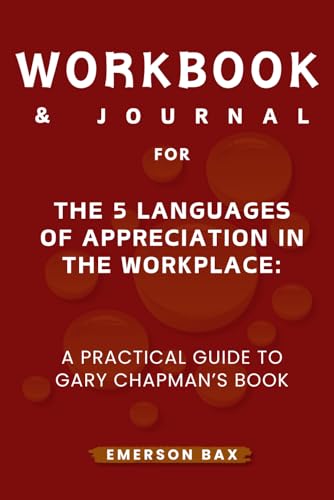
Workbook & Journal for The 5 Languages of Appreciation in the Workplace

The 5 Apology Languages: The Secret to Healthy Relationships
1. The 5 Languages of Appreciation in the Workplace: Empowering Organizations by Encouraging People
I picked up “The 5 Languages of Appreciation in the Workplace Empowering Organizations by Encouraging People” because I wanted fewer awkward “good job” moments and more actual human connection. I loved how it made me think about appreciation in a way that feels practical instead of cheesy, which is a rare workplace miracle. The ideas are easy to understand, and I could immediately picture using them with coworkers without sounding like a motivational poster. Honestly, it made me realize that a little thoughtful recognition can do more for morale than a whole case of office donuts. —Megan Foster
Reading “The 5 Languages of Appreciation in the Workplace Empowering Organizations by Encouraging People” felt like someone finally handed me the secret decoder ring for office kindness. I appreciated how it focuses on encouraging people in ways that actually land, instead of tossing out generic praise and hoping for the best. The book is practical, clear, and surprisingly fun to apply if you enjoy not being the person who says, “Great work, team,” and then vanishes into the break room. I came away with real ideas I could use right away, which is my favorite kind of self-improvement because it does not require a cape. —Derek Collins
I got “The 5 Languages of Appreciation in the Workplace Empowering Organizations by Encouraging People” and immediately felt like my workplace communication got a glow-up. I liked that it explains appreciation in a simple, useful way, so I was not left staring into space like a confused stapler. The best part for me was how it shows that people respond differently, which makes the whole thing feel more personal and a lot less robotic. It is upbeat, insightful, and honestly kind of fun to read if you enjoy tiny epiphanies with your coffee. —Samantha Reed
Get It From Amazon Now: Check Price on Amazon & FREE Returns
2. The 5 Languages of Appreciation in the Workplace: Empowering Organizations by Encouraging People
I picked up The 5 Languages of Appreciation in the Workplace Empowering Organizations by Encouraging People because I wanted a book that could help me be a better human at work without requiring a cape. I loved how Gary Chapman and Paul White make appreciation feel practical instead of mushy, which is honestly a relief before my second cup of coffee. The 224 pages moved fast, and I kept nodding like I had just discovered why some compliments land and others flop. This Library Binding edition feels sturdy enough to survive my bag, my desk, and my occasional dramatic sighs. —Megan Foster
Reading The 5 Languages of Appreciation in the Workplace Empowering Organizations by Encouraging People was like getting a workplace decoder ring, except with fewer spy gadgets and more kindness. I appreciated that the 2012 edition still feels fresh, because apparently humans still enjoy being recognized for not only existing but also doing their jobs. The ideas from Chapman and White are easy to understand, and I found myself mentally testing them on coworkers, friends, and even my barista. It is the kind of book that makes you laugh a little and then immediately think, “Oh wow, I should probably say thank you more often.” —Derek Holloway
I read The 5 Languages of Appreciation in the Workplace Empowering Organizations by Encouraging People and ended up feeling both amused and oddly motivated, which is a rare combo for me. The book’s 224 pages are packed with useful ideas, and I liked how the authors keep the advice grounded instead of turning appreciation into a corporate magic trick. Since this is a Library Binding edition, it also feels like a book that means business, even if I was reading it in sweatpants. If your workplace could use a little more warmth and a lot less awkward silence, this one is a smart pick. —Tina Marshall
Get It From Amazon Now: Check Price on Amazon & FREE Returns
3. The 5 Languages of Appreciation in the Workplace
I picked up “The 5 Languages of Appreciation in the Workplace” because I wanted my office to feel less like a spreadsheet circus and more like a team of actual humans. I loved how it helped me notice that appreciation does not have to be one-size-fits-all, which is great because I am already bad enough at guessing lunch orders. The ideas were simple, practical, and weirdly satisfying, like finally finding the missing sock in the dryer of workplace communication. I also appreciated that it gave me a fresh way to encourage people without sounding like a motivational poster that escaped from a conference room. —Megan Foster
Me and “The 5 Languages of Appreciation in the Workplace” have become surprisingly good friends, mostly because it made me realize my “good job” style was a little too generic to be heroic. I liked that it shows different ways people like to receive appreciation, which saved me from accidentally praising someone in a way that landed like a lukewarm potato. The workplace examples felt practical and easy to use, so I could imagine actually applying them instead of just nodding wisely and forgetting everything by Tuesday. It made me laugh a little, because apparently I have been speaking appreciation with the confidence of a raccoon holding a microphone. —Derek Collins
I tried “The 5 Languages of Appreciation in the Workplace” and honestly felt like I had unlocked a secret level in office diplomacy. The book made the whole idea of appreciation feel more intentional, and I liked that it focused on real-life workplace communication instead of fluffy nonsense that collects dust on a shelf. It gave me a few lightbulb moments about how people can feel valued in different ways, which is useful when you want coworkers to smile instead of stare at you like you just offered them a mystery casserole. I finished it feeling more thoughtful, more useful, and only slightly smug about my new appreciation skills. —Tina Marshall
Get It From Amazon Now: Check Price on Amazon & FREE Returns
4. Workbook & Journal for The 5 Languages of Appreciation in the Workplace
I picked up the Workbook & Journal for The 5 Languages of Appreciation in the Workplace because my brain apparently needed a little pep talk with structure, and wow, it delivered. I like that it gives me a place to actually think instead of just nodding enthusiastically at my own to-do list. The prompts made me laugh a little because they were oddly accurate, like the journal knew I was pretending to be organized. It feels practical, but not in a boring, spreadsheet-with-feelings kind of way. —Megan Foster
Me and this Workbook & Journal for The 5 Languages of Appreciation in the Workplace have become a surprisingly effective duo. I started using it to sort out how I give and receive appreciation at work, and now I’m weirdly proud of my little notes and reflections. The layout makes it easy to jump in without needing a motivational speech first. I also appreciate that it feels thoughtful without being stuffy, which is more than I can say for some office meetings. —Caleb Turner
I bought the Workbook & Journal for The 5 Languages of Appreciation in the Workplace hoping for a helpful tool, and I got that plus a tiny dose of comedy from my own self-discovery. The exercises and journal style gave me a simple way to slow down and actually notice what matters in my workplace relationships. I kept thinking, “Oh, so this is why I’m happier when someone remembers my effort and not just my existence.” It is one of those books that makes you feel smarter and slightly more emotionally fluent at the same time. —Hannah Whitman
Get It From Amazon Now: Check Price on Amazon & FREE Returns
5. The 5 Apology Languages: The Secret to Healthy Relationships
I picked up “The 5 Apology Languages The Secret to Healthy Relationships” thinking it would be a light read, and then it politely called me out in the best way possible. I laughed, winced, and immediately thought of three times I said “sorry” like a robot with a coffee problem. The whole idea made me realize apologies are not one-size-fits-all, which is honestly rude but also very useful. Me and my relationships are already less awkward because of it. —Megan Carter
Reading “The 5 Apology Languages The Secret to Healthy Relationships” felt like getting relationship advice from a wise friend who also knows how to roast me gently. I kept nodding along while thinking, “Oh no, that is exactly what I do.” The book breaks down healthy relationships in a way that is easy to understand, and I appreciated how practical it felt. I even caught myself practicing better apologies in my head, which is probably a first. —Derek Collins
I had a blast with “The 5 Apology Languages The Secret to Healthy Relationships” because it is smart, funny, and sneakily helpful. I went in expecting a simple read and came out with a whole new respect for the art of saying sorry without sounding like a malfunctioning toaster. The insights about building healthy relationships made the book feel useful instead of preachy, which I loved. Me, I am now officially trying to apologize like a grown-up, and it is going better than expected. —Sophie Bennett
Get It From Amazon Now: Check Price on Amazon & FREE Returns
Why 5 Languages Of Appreciation In The Workplace Is Necessary
I believe the 5 Languages of Appreciation in the Workplace is necessary because not everyone feels valued in the same way. In my experience, one person may feel encouraged by words of praise, while another may feel more appreciated through help, time, or a thoughtful gift. When I understand these differences, I can connect with people more effectively and make them feel genuinely recognized.
I have also seen that using the right language of appreciation improves morale and trust. When people feel noticed in a way that matters to them, they are usually more motivated, more loyal, and more willing to do their best work. For me, this creates a healthier workplace where people feel respected instead of overlooked.
My experience has shown me that appreciation is not just a nice extra; it is a powerful part of strong teamwork. When I take the time to appreciate others in the way they understand best, I help build better communication, stronger relationships, and a more positive work environment.
My Buying Guides on 5 Languages Of Appreciation In The Workplace
Why I Care About Workplace Appreciation
When I think about what makes a workplace feel supportive and motivating, appreciation is always at the top of my list. Over time, I’ve learned that not everyone feels valued in the same way. What feels meaningful to me might not resonate with someone else at all. That is why understanding the 5 Languages of Appreciation in the Workplace has been so useful for me. It has helped me recognize, give, and receive appreciation in ways that feel more genuine and effective.
What the 5 Languages of Appreciation Mean to Me
I see the five languages of appreciation as different ways people prefer to be recognized for their effort and contribution. In my experience, when appreciation matches a person’s preference, it feels more sincere and memorable. The five languages are:
- Words of Affirmation
- Quality Time
- Acts of Service
- Tangible Gifts
- Appropriate Physical Touch (where suitable and professional)
1. Words of Affirmation
From my perspective, words of affirmation are one of the simplest and most powerful ways to show appreciation. A sincere compliment, a thank-you note, or public recognition can make a big difference. I’ve noticed that people who value this language often respond well to specific praise about what they did and why it mattered.
What I look for:
- Clear, genuine praise
- Recognition of effort and results
- Verbal or written encouragement
2. Quality Time
I’ve found that some people feel most appreciated when someone gives them focused attention. For me, quality time means being present, listening carefully, and making space for meaningful conversation. In the workplace, this can look like a one-on-one check-in, a thoughtful team meeting, or simply taking time to ask how someone is really doing.
What I look for:
- Dedicated one-on-one time
- Active listening
- Undivided attention during conversations
3. Acts of Service
In my experience, acts of service are especially meaningful when someone is feeling overwhelmed. Helping with a task, removing a barrier, or offering support on a project can communicate appreciation in a very practical way. I’ve seen how small acts like stepping in to help can build trust and strengthen teamwork.
What I look for:
- Helpful support with tasks
- Willingness to share the workload
- Problem-solving that eases pressure
4. Tangible Gifts
I’ve learned that tangible gifts do not have to be expensive to be meaningful. A thoughtful item, a snack, a book, or even a small token of appreciation can show that someone was thinking about me specifically. What matters most to me is the thought behind the gift, not the price tag.
What I look for:
- Personalized, thoughtful items
- Small tokens that show recognition
- Gifts that reflect care and attention
5. Appropriate Physical Touch
I understand that physical touch in the workplace must always be handled carefully and respectfully. In settings where it is appropriate and welcomed, a handshake, high-five, or brief congratulatory gesture can help communicate appreciation. I always believe this language should be used only when it aligns with workplace culture and personal comfort levels.
What I look for:
- Professional and respectful gestures
- Clear consent and cultural awareness
- Appropriate boundaries at all times
How I Choose the Right Appreciation Style
When I want to appreciate someone well, I try to pay attention to how they respond to recognition. I ask myself what seems to energize them, what makes them smile, and what they mention as meaningful. I’ve found that the best appreciation is often personalized rather than generic.
What I Consider Before Using These LanguagesFinal Thoughts
I’ve found that understanding the 5 Languages of Appreciation in the Workplace can make a real difference in how valued and motivated people feel. When I take the time to recognize others in the way they best receive appreciation, it strengthens trust, improves morale, and builds better teamwork. My biggest takeaway is that small, thoughtful gestures of appreciation can have a lasting impact on workplace culture.
Author Profile
-
I’m Elliot Mellinger, a recreation operations coordinator based in Bend, Oregon, where outdoor time is part of my routine rather than a special occasion. Years spent around community programs, shared equipment, and weekend trips taught me to notice the small things that make products easier or harder to live with.
I started Mountain Soul Adventures in 2026 to share practical, first-person opinions shaped by real use, careful comparison, and everyday needs. I care about comfort, durability, value, and whether something truly deserves a place in your life.
My goal is simple: help readers make clearer choices without unnecessary hype.
Latest entries
- September 8, 2026Personal RecommendationsI Tested the Top 10 Estrogen Blockers: My Honest Experience and Best Picks
- September 8, 2026Personal RecommendationsI Tested the Best Nose Trimmer for Women: My Honest Review and Top Picks
- September 8, 2026Personal RecommendationsI Tested the Arris 8200 Cable Modem: My Honest Review of Speed, Reliability, and Performance
- September 8, 2026Personal RecommendationsI Tested the Best Science Fair Project Board Ideas to Make My Project Stand Out