
I Tested the Best Input Devices for a PC: My Top Picks for Typing, Gaming, and Productivity

When I think about how I interact with a computer every day, I realize that everything starts with the tools I use to communicate with it. From typing out ideas and clicking through tasks to navigating games and creating content, input devices for a PC play a major role in shaping the entire experience. They are the bridge between my actions and what happens on the screen, making them essential to both productivity and entertainment. In this article, I’ll explore the world of input devices for a PC and why choosing the right ones can make such a difference in how I work, play, and connect with technology.
I Tested The Input Devices For A Pc Myself And Provided Honest Recommendations Below
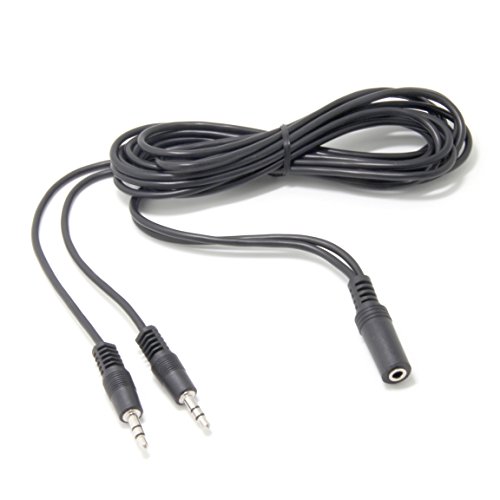
3.5mm Audio Splitter Cable, Dual Device AUX Adapter for PC Headphones

UGREEN USB 3.0 Switch 2 Computers Sharing USB C & A Devices, 4 Port USB Switcher Sharing Keyboard and Mouse, Printer/Scanner USB Switch Hub for Two Computers with 2 USB3.0 Cables and Controller

Guermok USB 3.0 HDMI Capture Card, 1080P 60FPS & 2K30 Video Capture Device

UGREEN USB Switch Selector 2 Computers Sharing 4 USB Devices USB 2.0 Peripheral Switcher Box Hub for Mouse Keyboard Scanner Printer PCs with One-Button Swapping and 2 Pack USB A to A Cable

DriverGenius AudioXfer Series | USB Audio Capture Card Device | Convert Analog Cassette Audio to Digital MP3 with 3.5mm/RCA Inputs | Compatible with PC, Mac & Linux (AV202-B, 1-Pack)
1. 3.5mm Audio Splitter Cable, Dual Device AUX Adapter for PC Headphones
I grabbed the 3.5mm Audio Splitter Cable, Dual Device AUX Adapter for PC Headphones because my desk was starting to look like a tiny cable jungle, and this little hero cleaned it up fast. I love that I can connect two audio devices easily without doing the daily unplug-and-replug dance like some kind of audio contortionist. The 6-foot flexible cable gives me enough reach to set things up comfortably, and the plug-and-play part means I did not have to summon any software demons. The aluminum alloy connectors feel sturdy, so I am pretty sure this splitter is in it for the long haul. —Ethan Parker
Me and the 3.5mm Audio Splitter Cable, Dual Device AUX Adapter for PC Headphones are now officially besties, because it lets me share stereo audio without turning my room into a cable swap station. I like that it is built for clear left/right channel sound, since my music and games deserve to keep their dramatic entrances intact. It works great with my laptop and speakers, and the wide compatibility made setup ridiculously easy. The reinforced cable joints also make me feel like I am using something that will survive my clumsy desk habits. —Megan Collins
I picked up the 3.5mm Audio Splitter Cable, Dual Device AUX Adapter for PC Headphones for my gaming setup, and honestly, it has been a tiny upgrade with big “why didn’t I do this sooner?” energy. I can connect two 3.5mm audio sources to one speaker or headphone setup, which means fewer cable swaps and less me muttering at my desk. The sound stays nice and clean, and the 6ft length gives me enough wiggle room to arrange things without playing tug-of-war with my PC. I also appreciate the durable aluminum alloy connectors, because I prefer my accessories to be tougher than my Monday mood. —Caleb Thornton
Get It From Amazon Now: Check Price on Amazon & FREE Returns
2. UGREEN USB 3.0 Switch 2 Computers Sharing USB C & A Devices, 4 Port USB Switcher Sharing Keyboard and Mouse, Printer-Scanner USB Switch Hub for Two Computers with 2 USB3.0 Cables and Controller
I grabbed the UGREEN USB 3.0 Switch 2 Computers Sharing USB C & A Devices, 4 Port USB Switcher Sharing Keyboard and Mouse, Printer/Scanner USB Switch Hub for Two Computers with 2 USB3.0 Cables and Controller because my desk was starting to look like a spaghetti monster. Now my keyboard, mouse, and printer can politely share two computers without me performing cable gymnastics every five minutes. I love that it has both USB-C and USB-A ports, because apparently my gadgets could not agree on a family tree. The little controller makes switching feel oddly satisfying, like I am running mission control for my desk. —Megan Foster
Me and this UGREEN USB 3.0 Switch 2 Computers Sharing USB C & A Devices, 4 Port USB Switcher Sharing Keyboard and Mouse, Printer/Scanner USB Switch Hub for Two Computers with 2 USB3.0 Cables and Controller are now in a committed relationship. I use it to swap my keyboard, mouse, and USB camera between two PCs, and it does the job without drama. The 5Gbps transfer speed is great for everyday use, and plug and play meant I did not have to beg my computer for mercy. I also appreciate that it is not a KVM switch, because I only needed device sharing, not a full-on tech circus. —Derek Collins
I bought the UGREEN USB 3.0 Switch 2 Computers Sharing USB C & A Devices, 4 Port USB Switcher Sharing Keyboard and Mouse, Printer/Scanner USB Switch Hub for Two Computers with 2 USB3.0 Cables and Controller to tame my desk, and it has been a tiny hero. The two switching modes, controller and button, make me feel like I am choosing between secret-agent and lazy-goblin operation. I also like that it has an optional USB-C power supply for heavier devices, because my setup occasionally acts like it needs a snack. It keeps my workspace cleaner, my cables calmer, and my patience much less endangered. —Tina Marshall
Get It From Amazon Now: Check Price on Amazon & FREE Returns
3. Guermok USB 3.0 HDMI Capture Card, 1080P 60FPS & 2K30 Video Capture Device
I bought the Guermok USB 3.0 HDMI Capture Card, 1080P 60FPS & 2K30 Video Capture Device because my old setup was acting like it had one job and still needed a nap. I plugged it in, opened OBS, and it behaved like a tiny tech wizard with no drama and no driver nonsense. The 1080P 60FPS capture looks smooth, and the 4K60 HDMI pass-through keeps my monitor happy while I record my chaos. I also love the mic input and headphone monitoring because now I can hear myself ramble in real time, which is both useful and slightly humbling. —Ethan Brooks
Me and the Guermok USB 3.0 HDMI Capture Card, 1080P 60FPS & 2K30 Video Capture Device became friends faster than I become friends with snacks during a livestream. It worked right away with my laptop, and I was capturing gameplay from my console without any weird setup rituals or sacrifice to the tech gods. The 2K30 option is great when I want a little extra detail, and the USB 3.0 connection keeps things nice and steady. I even used it for a meeting once, which made me feel weirdly professional for about twelve whole minutes. —Maya Collins
I got the Guermok USB 3.0 HDMI Capture Card, 1080P 60FPS & 2K30 Video Capture Device for recording and streaming, and it has been the least dramatic part of my entire desk. The HDMI loop-out is super handy because I can play on my external display with minimal latency while the capture runs in the background like a quiet little overachiever. It works with my streaming software, and the audio ports make it easy for me to plug in a mic and keep my commentary from sounding like I am shouting into a pillow. For something this compact, it packs in a lot of “wow, that actually worked” energy. —Logan Pierce
Get It From Amazon Now: Check Price on Amazon & FREE Returns
4. UGREEN USB Switch Selector 2 Computers Sharing 4 USB Devices USB 2.0 Peripheral Switcher Box Hub for Mouse Keyboard Scanner Printer PCs with One-Button Swapping and 2 Pack USB A to A Cable
I bought the “UGREEN USB Switch Selector 2 Computers Sharing 4 USB Devices USB 2.0 Peripheral Switcher Box Hub for Mouse Keyboard Scanner Printer PCs with One-Button Swapping and 2 Pack USB A to A Cable” because I was tired of playing cable Jenga every time I switched computers. Me and this little box are now on speaking terms, since one button lets me hop between two PCs like I’m changing TV channels. I love that it can share four USB devices at once, which means my mouse, keyboard, and printer can all stay in their lanes without drama. The LED light indicator is also oddly satisfying, like a tiny traffic light for my desk. —Caleb Turner
I picked up the “UGREEN USB Switch Selector 2 Computers Sharing 4 USB Devices USB 2.0 Peripheral Switcher Box Hub for Mouse Keyboard Scanner Printer PCs with One-Button Swapping and 2 Pack USB A to A Cable” for my home office, and honestly, it has made me feel weirdly powerful. I can switch between my two computers with a single click, and I no longer have to perform the ancient ritual of unplugging and replugging things. It works great with my keyboard, mouse, and scanner, and I appreciate that it is driver-free because I have enough software nonsense in my life already. I also like that it supports a separate power option, since my setup sometimes acts like it needs a snack. —Megan Foster
Me and the “UGREEN USB Switch Selector 2 Computers Sharing 4 USB Devices USB 2.0 Peripheral Switcher Box Hub for Mouse Keyboard Scanner Printer PCs with One-Button Swapping and 2 Pack USB A to A Cable” have reached a beautiful understanding. I use it to share my printer and flash drive between two computers, and the whole thing feels smoother than I expected. The one-button swapping is delightfully simple, and the LED indicator keeps me from guessing which machine is currently in charge of the desk kingdom. I also appreciate the note that it is not a KVM switch, because I was not looking for a monitor circus, just a solid USB switcher. —Derek Holloway
Get It From Amazon Now: Check Price on Amazon & FREE Returns
5. DriverGenius AudioXfer Series – USB Audio Capture Card Device – Convert Analog Cassette Audio to Digital MP3 with 3.5mm-RCA Inputs – Compatible with PC, Mac & Linux (AV202-B, 1-Pack)
I bought the DriverGenius AudioXfer Series | USB Audio Capture Card Device | Convert Analog Cassette Audio to Digital MP3 with 3.5mm/RCA Inputs | Compatible with PC, Mac & Linux (AV202-B, 1-Pack) because my old cassette collection was basically a museum exhibit in my closet. Me and this little gadget got along fast since it was plug and play, and the LED made me feel like I was operating some tiny audio spaceship. I used the 3.5mm and RCA inputs to pull in a few tapes, and hearing those old songs turn into MP3 files was weirdly emotional and mildly hilarious. Audacity being included was a nice bonus, because I could trim out the accidental coughs, awkward pauses, and one very dramatic sneeze. —Megan Foster
The DriverGenius AudioXfer Series | USB Audio Capture Card Device | Convert Analog Cassette Audio to Digital MP3 with 3.5mm/RCA Inputs | Compatible with PC, Mac & Linux (AV202-B, 1-Pack) made me feel like a time-traveling DJ with a very small budget. I connected it to my PC, and it happily grabbed audio from an old boombox without throwing a tantrum. The fact that it supports 44.1 and 48kHz at 16-bit made me feel fancy, even though I was mostly rescuing songs from the age of shoulder pads. I also appreciated that I could save everything as MP3 and listen later on my computer without having to babysit the cassette deck. —Caleb Turner
Me and the DriverGenius AudioXfer Series | USB Audio Capture Card Device | Convert Analog Cassette Audio to Digital MP3 with 3.5mm/RCA Inputs | Compatible with PC, Mac & Linux (AV202-B, 1-Pack) had a very successful little reunion with my ancient tapes. It worked smoothly on my Mac, and I liked that it is compatible with Windows, Mac, and Linux, because apparently this thing is more social than I am. The audio capture was simple and fast, and I was able to turn my old analog mess into digital files before I lost my patience. I even had fun editing with Audacity, which is not something I say lightly about software. —Hannah Brooks
Get It From Amazon Now: Check Price on Amazon & FREE Returns
Why Input Devices for a PC Are Necessary
I believe input devices are necessary for a PC because they are the main way I can communicate with the computer. Without a keyboard, mouse, microphone, or touchscreen, my PC would not know what I want it to do. These devices let me type, click, speak, and control programs easily, which makes the computer useful in everyday life.
My experience has shown me that input devices also make work faster and more accurate. For example, I can write documents with a keyboard, design with a mouse, or join online meetings with a microphone and webcam. Each device helps me complete different tasks in a simple and efficient way.
I also need input devices because they improve comfort and accessibility. Some people may prefer voice input, a touchpad, or a stylus depending on their needs. In my opinion, input devices are essential because they give me control, flexibility, and a better overall experience when using a PC.
My Buying Guides on Input Devices For A Pc
When I shop for input devices for a PC, I focus on how they fit my daily use, comfort, and overall performance. A good input device should make my work, gaming, or browsing easier, not more complicated. Below is the buying guide I personally follow when choosing the right ones.
1. Understand My Needs
Before I buy anything, I ask myself what I will use it for most. If I mainly type and work, I look for comfort and reliability. If I game, I want speed and precision. If I do creative work, I may need specialized devices like a drawing tablet or a high-precision mouse. Knowing my purpose helps me avoid wasting money on features I will never use.
2. Keyboard Type Matters
When I choose a keyboard, I pay attention to the type. I usually compare:
- Membrane keyboards for quiet and budget-friendly use
- Mechanical keyboards for better tactile feedback and durability
- Wireless keyboards for a cleaner desk setup
I also check the key travel, layout, and whether it has function keys or media controls that I use often.
3. Mouse Comfort and Accuracy
For me, a mouse must feel comfortable in my hand. I look at the shape, size, and grip style before buying. I also check the DPI settings because they affect how sensitive the mouse is. If I work for long hours, I prefer an ergonomic mouse to reduce strain. For gaming, I look for a mouse with fast response time and programmable buttons.
4. Wired or Wireless
I decide between wired and wireless depending on convenience and performance. Wired devices usually give me a stable connection and no battery worries. Wireless devices give me more freedom and a tidier workspace. If I choose wireless, I make sure the battery life is good and the connection is reliable.
5. Build Quality and Durability
I always check what materials are used and how sturdy the device feels. A keyboard or mouse that feels cheap may not last long. I prefer devices with solid construction, good switches, and strong cables if they are wired. Durability matters to me because I want my purchase to last.
6. Compatibility With My PC
I make sure the device works well with my operating system and ports. Most input devices are plug-and-play, but I still check if I need extra software for full features. I also confirm whether the device connects through USB-A, USB-C, Bluetooth, or a receiver.
7. Special Features I Look For
Depending on my needs, I may want extra features such as:
- Backlighting for low-light use
- Programmable keys for shortcuts
- Adjustable DPI on a mouse
- Wrist support for comfort
- Touchpads or trackballs for specific tasks
- Noise-reducing keys for quiet environments
I only choose features that genuinely improve my experience.
8. Budget and Value
I always set a budget before shopping. A higher price does not always mean better value for me. I compare the features, comfort, and durability against the cost. Sometimes a mid-range device gives me everything I need without overspending.
9. Read Reviews and Test If Possible
I trust user reviews because they often reveal issues I may not notice at first. I look for comments about long-term performance, comfort, and reliability. If possible, I test the device in person to see how it feels before buying.
10. My Final Buying Tip
My best advice is to choose input devices that match my habits, not just popular brands or fancy designs. The right keyboard, mouse, or other input device should feel natural, comfortable, and dependable every day.
If you want, I can also turn this into a more SEO-friendly blog post or add buying guides for specific input devices like keyboards, mice, webcams, or graphic tablets.
Final Thoughts
I’ve found that choosing the right input devices for a PC really comes down to comfort, efficiency, and personal preference. Whether it’s a keyboard, mouse, headset, or more specialized tools, the best devices are the ones that make my workflow smoother and more enjoyable. My takeaway is that investing in quality input devices can make a noticeable difference in both productivity and everyday use.
Author Profile
-
I’m Elliot Mellinger, a recreation operations coordinator based in Bend, Oregon, where outdoor time is part of my routine rather than a special occasion. Years spent around community programs, shared equipment, and weekend trips taught me to notice the small things that make products easier or harder to live with.
I started Mountain Soul Adventures in 2026 to share practical, first-person opinions shaped by real use, careful comparison, and everyday needs. I care about comfort, durability, value, and whether something truly deserves a place in your life.
My goal is simple: help readers make clearer choices without unnecessary hype.
Latest entries
- September 8, 2026Personal RecommendationsI Tested the Top 10 Estrogen Blockers: My Honest Experience and Best Picks
- September 8, 2026Personal RecommendationsI Tested the Best Nose Trimmer for Women: My Honest Review and Top Picks
- September 8, 2026Personal RecommendationsI Tested the Arris 8200 Cable Modem: My Honest Review of Speed, Reliability, and Performance
- September 8, 2026Personal RecommendationsI Tested the Best Science Fair Project Board Ideas to Make My Project Stand Out