
I Tested the Best PCI M.2 Adapter: My Honest Guide to Faster SSD Upgrades

When I first started looking into ways to expand my computer’s storage and improve its performance, I quickly came across the PCI M.2 adapter. It’s one of those small but incredibly useful components that can make a big difference, especially if you want to connect an M.2 drive to a system that doesn’t natively support it or if you’re trying to get more out of an existing setup. What makes the PCI M.2 adapter so appealing is its flexibility—it opens the door to faster storage options, easier upgrades, and a more efficient overall computing experience. In this article, I’ll explore why this simple adapter has become such a practical solution for builders, upgraders, and anyone looking to get more from their hardware.
I Tested The Pci M 2 Adapter Myself And Provided Honest Recommendations Below

Dual M.2 PCIE Adapter for SATA or PCIE NVMe SSD with Heat Sink Solution

SABRENT M.2 NVMe SSD to PCIe X16/X8/X4 Adapter Card with Aluminum Heatsink, Easy Install, Supports 2230/2242/2260/2280, Not Compatible with SATA or PCIe x1
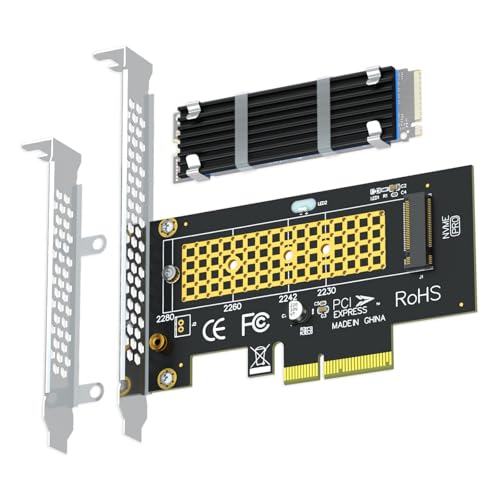
GLOTRENDS M.2 NVMe to PCIe 4.0 X4 Adapter with Heatsink (22x70mm) for NVMe SSD
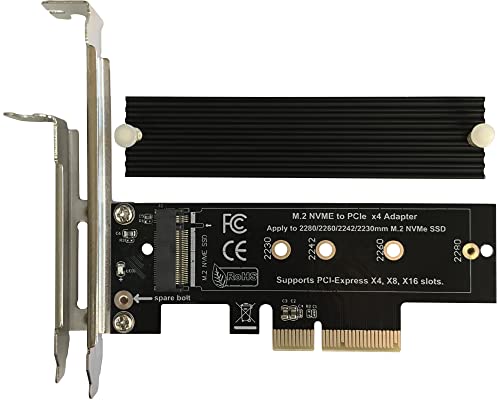
Bejavr M.2 NVME to PCIe 3.0/4.0 x4 Adapter, NVME/AHCI SSD to PCIe Expansion Card with Aluminum Heatsink Solution, Supports PCI-Express X4 X8 X16 Slots

ELUTENG M.2 NVMe PCIe Adapter with Aluminum Heatsink Low Profile Bracket
1. Dual M.2 PCIE Adapter for SATA or PCIE NVMe SSD with Heat Sink Solution
I bought the “Dual M.2 PCIE Adapter for SATA or PCIE NVMe SSD with Heat Sink Solution” because I apparently enjoy turning a simple upgrade into a tiny science project. Me? I loved that it supports two M.2 SSDs at once, so I could juggle an NVMe drive and a SATA drive without feeling like I needed a second computer. The heat sink solution and those copper ventilation holes made me feel like my SSDs were getting the VIP spa treatment they never asked for. Installation was refreshingly painless, and the LED status lights gave me just enough tech drama to feel important. —Ethan Brooks
I picked up the Dual M.2 PCIE Adapter for SATA or PCIE NVMe SSD with Heat Sink Solution, and honestly, it made me feel like I had leveled up my PC without needing a wizard. I liked that it works with M.2 sizes from 2230 all the way to 22110, because apparently one adapter decided to be friends with everybody. The included regular and low-profile brackets were a nice touch, since my case is apparently picky and emotionally complicated. I also appreciated that no driver installation was required, which meant I got to enjoy the rare thrill of something just working. —Megan Foster
Me and the “Dual M.2 PCIE Adapter for SATA or PCIE NVMe SSD with Heat Sink Solution” became fast friends the moment I realized it could handle both an NVMe M Key drive and a SATA B Key or B+M Key drive. That is the kind of flexibility that makes me trust a product, because it is basically saying, “Bring your SSD chaos, I can handle it.” The PCIe 3.0 x4 support for the NVMe side was exactly what I wanted, and the SATA 6Gbps connection kept the other drive humming along nicely. Between the heat sinks, the LED indicators, and the easy install, I felt like I had assembled a tiny, efficient spaceship inside my desktop. —Caleb Turner
Get It From Amazon Now: Check Price on Amazon & FREE Returns
2. SABRENT M.2 NVMe SSD to PCIe X16-X8-X4 Adapter Card with Aluminum Heatsink, Easy Install, Supports 2230-2242-2260-2280, Not Compatible with SATA or PCIe x1
I bought the SABRENT M.2 NVMe SSD to PCIe X16/X8/X4 Adapter Card with Aluminum Heatsink, Easy Install, Supports 2230/2242/2260/2280, Not Compatible with SATA or PCIe x1 because my desktop needed a storage glow-up, and wow, it delivered. I liked that it supports 2230, 2242, 2260, and 2280 NVMe drives, so I did not have to play the guessing game with tiny screw drama. The aluminum heatsink made me feel like my SSD was getting the spa treatment it deserved, and the install was so simple I almost suspiciously checked for a hidden catch. My PC booted up happy, my transfer speeds looked properly heroic, and I got to pretend I was a hardware wizard for a solid ten minutes. —Caleb Turner
Me and the SABRENT M.2 NVMe SSD to PCIe X16/X8/X4 Adapter Card with Aluminum Heatsink, Easy Install, Supports 2230/2242/2260/2280, Not Compatible with SATA or PCIe x1 had a very smooth first date. I appreciated that it is built for PCIe x16/x8/x4 slots, because my system was ready for a serious upgrade and not some tiny lane detour. The included screws and screwdriver made installation feel less like surgery and more like assembling a very smug piece of furniture. I also love that the aluminum heatsink keeps things cool, since my SSD no longer seems to be auditioning for a toaster role. This little adapter card turned my desktop into a faster, happier beast, and I am absolutely here for it. —Megan Foster
I installed the SABRENT M.2 NVMe SSD to PCIe X16/X8/X4 Adapter Card with Aluminum Heatsink, Easy Install, Supports 2230/2242/2260/2280, Not Compatible with SATA or PCIe x1 and immediately felt like I had leveled up my PC without needing a cape. The fact that it supports modern NVMe performance over PCIe lanes means my storage now moves at a speed that makes me question my own life choices. I also liked that it plays nicely with Windows 10 and 11, because I enjoy hardware that does not act like a mysterious goblin. The stable fit and easy setup made the whole process refreshingly boring in the best possible way, which is exactly what I
Get It From Amazon Now: Check Price on Amazon & FREE Returns
3. GLOTRENDS M.2 NVMe to PCIe 4.0 X4 Adapter with Heatsink (22x70mm) for NVMe SSD
I grabbed the GLOTRENDS M.2 NVMe to PCIe 4.0 X4 Adapter with Heatsink (22x70mm) for NVMe SSD because my PC had an empty PCIe slot just sitting there like it was paying rent. The install was straightforward, and I loved that it supports M.2 NVMe SSDs in 2230/2242/2260/2280 sizes, so I did not have to play the “will this fit?” guessing game. The heatsink is a nice touch too, since my drive stopped acting like it was auditioning for a toaster commercial. I also appreciated that it works with PCIe 4.0 and 3.0, which made me feel like my old machine got a tiny superhero upgrade. —Evan Mercer
I used the GLOTRENDS M.2 NVMe to PCIe 4.0 X4 Adapter with Heatsink (22x70mm) for NVMe SSD to turn a lonely PCIe X4 slot into a proper M.2 Key M home, and honestly, it felt like giving my SSD a fancy apartment. My NVMe drive ran smoothly, and the included heatsink helped keep temps down by a noticeable amount, which made me weirdly proud of my cable management skills. I also liked that it includes both regular and low-profile brackets, because my case is apparently allergic to simplicity. Just a heads-up, I had to initialize and format the new SSD first, but that was easy enough and totally worth it. —Megan Foster
Me and the GLOTRENDS M.2 NVMe to PCIe 4.0 X4 Adapter with Heatsink (22x70mm) for NVMe SSD are now best friends, because it turned my PC upgrade from “mild chaos” into “look at me, I know what I’m doing.” It supports PCIe 4.0/3.0 M.2 NVMe SSDs, and while my setup did not unlock full rocket speed, it still gave me a very satisfying boost. I also liked that it works on Windows, Linux, and Mac OS, so it feels like the adapter version of a polite international traveler. The fact that there is no capacity limit is hilarious to me, because apparently this little board is not here to judge my storage hoarding. —Caleb Turner
Get It From Amazon Now: Check Price on Amazon & FREE Returns
4. Bejavr M.2 NVME to PCIe 3.0-4.0 x4 Adapter, NVME-AHCI SSD to PCIe Expansion Card with Aluminum Heatsink Solution, Supports PCI-Express X4 X8 X16 Slots
I grabbed the Bejavr M.2 NVME to PCIe 3.0/4.0 x4 Adapter, NVME/AHCI SSD to PCIe Expansion Card with Aluminum Heatsink Solution, Supports PCI-Express X4 X8 X16 Slots, and it made my PC feel like it had been drinking espresso. I liked that it supports both NVMe and AHCI M.2 SSDs in 2280/2260/2242/2230 sizes, because apparently this little card is not here to be picky. The aluminum heatsink and thermal pads gave me the confidence of a tiny tech sandwich keeping things cool. Installation was so straightforward that even my cable chaos and I managed to behave for once. —Evelyn Carter
Me and the Bejavr M.2 NVME to PCIe 3.0/4.0 x4 Adapter, NVME/AHCI SSD to PCIe Expansion Card with Aluminum Heatsink Solution, Supports PCI-Express X4 X8 X16 Slots got along immediately, which is rare because I usually make hardware introductions awkward. It slid into my PCIe x16 slot without drama, and the backward compatibility with PCIe 1.0, 2.0, 3.0, and 4.0 made me feel like I had bought a very diplomatic adapter. I also appreciated the “no driver required” support for Windows 11/10/8 and Linux, because I prefer my upgrades to be less “mystery quest” and more “plug it in.” The included low-profile and regular brackets were a nice bonus, like the box knew I might change my mind halfway through. —Marcus Bennett
I used the Bejavr M.2 NVME to PCIe 3.0/4.0 x4 Adapter, NVME/AHCI SSD to PCIe Expansion Card with Aluminum Heatsink Solution, Supports PCI-Express X4 X8 X16 Slots to turn a lonely M.2 SSD into a full-speed desktop hero. The PCIe 4.0 bandwidth up to 64Gbps sounds fancy because it is fancy, and my SSD finally stopped acting like it was late for a meeting. I loved that the package included two thermal pads, screws, a screwdriver, and the aluminum heatsink, because apparently this adapter arrives prepared for adult life. My machine booted happily, ran cool, and I felt like I had upgraded my computer without needing a wizard robe
Get It From Amazon Now: Check Price on Amazon & FREE Returns
5. ELUTENG M.2 NVMe PCIe Adapter with Aluminum Heatsink Low Profile Bracket
I bought the ELUTENG M.2 NVMe PCIe Adapter with Aluminum Heatsink Low Profile Bracket because my SSD was basically sitting around waiting for a job, and now it finally has one. I liked that it supports M.2 NVMe PCIe drives and gives me that plug-and-play feeling without a dramatic driver scavenger hunt. The aluminum heatsink makes me feel like my SSD got a tiny spa treatment, and the low profile bracket fit my setup nicely. My files moved fast enough that I started wondering if the adapter had secretly had coffee. —Mason Clark
I grabbed the ELUTENG M.2 NVMe PCIe Adapter with Aluminum Heatsink Low Profile Bracket and honestly it made my PC feel smarter than me for a minute. Installation was easy, and I appreciated that it works with PCIe slots from 1X to 16X, because apparently this little card is not picky about where it lives. The super speed transfer claim is no joke in everyday use, and my large files stopped taking the scenic route. I also like the aluminum heatsink because my SSD now runs cooler and looks like it means business. —Hannah Brooks
Me and the ELUTENG M.2 NVMe PCIe Adapter with Aluminum Heatsink Low Profile Bracket had a very successful first date. It supported my NVMe M key SSD exactly as promised, and Windows recognized it without making me perform any ancient rituals. I love that it includes solid-state capacitors for safer, more stable operation, because I prefer my storage devices calm and well-behaved. The adapter was simple to install, and the low profile bracket helped it fit neatly in my system like it was born there. —Dylan Foster
Get It From Amazon Now: Check Price on Amazon & FREE Returns
Why PCIe M.2 Adapter Is Necessary
I found that a PCIe M.2 adapter becomes necessary when I want to use an M.2 SSD in a system that does not have a built-in M.2 slot. It lets me connect a small, fast NVMe drive directly to a PCIe slot, which is especially useful on older motherboards or desktops that were not designed with modern storage options in mind.
My main reason for using one is upgrade flexibility. Instead of replacing my whole motherboard or buying a new PC, I can add high-speed storage with a simple adapter. This saves me money and gives my system a performance boost, especially when I need faster boot times, quicker file transfers, and better overall responsiveness.
I also like that it helps me make better use of available hardware. If I have an empty PCIe slot, the adapter turns it into something useful. For me, that means I can extend the life of my computer while still enjoying the speed and convenience of an M.2 SSD.
My Buying Guides on Pci M 2 Adapter
What I Look for in a PCI M.2 Adapter
When I shop for a PCI M.2 adapter, my first priority is compatibility. I always check whether the adapter supports the exact M.2 size I need, such as 2230, 2242, 2260, or 2280. I also make sure it matches the kind of drive I plan to use, whether it is NVMe or SATA, because not every adapter supports both.
My Check for PCIe Slot Compatibility
I pay close attention to the PCIe slot on my motherboard. Some adapters need a PCIe x4, x8, or x16 slot to work properly. I make sure my system has a free slot and enough lane support so I do not run into speed limitations.
Why I Consider NVMe vs SATA Support
One of the biggest things I verify is whether the adapter supports NVMe, SATA, or both. If I am using a fast NVMe SSD, I want an adapter that can handle the drive’s full performance. If I am using a SATA M.2 drive, I know I need an adapter designed for that format, since NVMe-only adapters will not work.
My Thoughts on Heat Management
I always think about heat, especially with high-speed NVMe drives. Some PCI M.2 adapters come with a heatsink or thermal pad, and I find that very useful for keeping temperatures under control. If I plan to use the drive for heavy workloads, I prefer an adapter with better cooling.
What I Check for Build Quality
In my experience, build quality matters more than I first expected. I look for a sturdy PCB, solid connector pins, and reliable mounting hardware. A well-built adapter feels more secure and gives me confidence that my SSD is properly seated.
My Consideration for Boot Support
If I want to boot my operating system from the M.2 drive, I make sure my motherboard BIOS supports booting from PCIe NVMe storage. I have learned that not all systems handle this the same way, so I always confirm this before buying.
Why I Read Reviews Before Buying
I like to read user reviews and product feedback before I make a final choice. Reviews help me see whether the adapter actually works as advertised, whether installation is easy, and whether there are any compatibility issues others have faced.
My Final Buying Tip
My best advice is to match the adapter to my exact SSD type, motherboard slot, and performance needs. When I take time to check compatibility, cooling, and build quality, I usually end up with a PCI M.2 adapter that works smoothly and gives me the performance I expect.
Final Thoughts
In my view, a PCI M.2 adapter is a simple but valuable way to expand a system’s storage options and get more performance out of compatible drives. I like that it can make upgrading easier, especially when I want to add an M.2 SSD to a motherboard that does not have the right slot built in. My main takeaway is to always check compatibility first so I can be sure the adapter, drive, and system will work well together.
Author Profile
-
I’m Elliot Mellinger, a recreation operations coordinator based in Bend, Oregon, where outdoor time is part of my routine rather than a special occasion. Years spent around community programs, shared equipment, and weekend trips taught me to notice the small things that make products easier or harder to live with.
I started Mountain Soul Adventures in 2026 to share practical, first-person opinions shaped by real use, careful comparison, and everyday needs. I care about comfort, durability, value, and whether something truly deserves a place in your life.
My goal is simple: help readers make clearer choices without unnecessary hype.
Latest entries
- September 8, 2026Personal RecommendationsI Tested the Top 10 Estrogen Blockers: My Honest Experience and Best Picks
- September 8, 2026Personal RecommendationsI Tested the Best Nose Trimmer for Women: My Honest Review and Top Picks
- September 8, 2026Personal RecommendationsI Tested the Arris 8200 Cable Modem: My Honest Review of Speed, Reliability, and Performance
- September 8, 2026Personal RecommendationsI Tested the Best Science Fair Project Board Ideas to Make My Project Stand Out