
I Tested the Best Car Stereo Noise Filter to Eliminate Static and Engine Whine for Crystal-Clear Sound

I’ve always found that one of the most frustrating parts of enjoying music in the car is when unwanted noise gets in the way. A car stereo noise filter can make a surprisingly big difference, helping clear up static, whining, and other interference that can distract from the listening experience. Whether I’m trying to enjoy a favorite playlist on a daily commute or simply want cleaner sound from a car audio system, understanding how this small device works can be the first step toward a much better ride.
I Tested The Car Stereo Noise Filter Myself And Provided Honest Recommendations Below
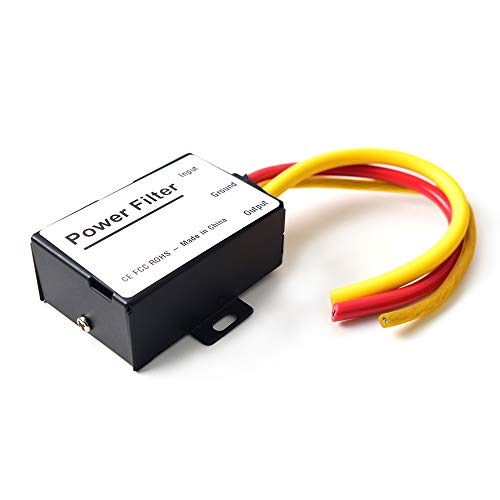
Car Power Filter EMI Noise Ground Loop Isolator Suppressor for Auto Stereo Audio Radio Stereos Amplifier Amp Speaker Equalizer Subwoofer 12V

BESIGN Ground Loop Noise Isolator for Car Audio/Home Stereo System with 3.5mm Audio Cable

Install Bay IBNF10 10 AMP Noise Filter for 12V Car Audio Products

Install Bay IBNF50 Noise Filter 50 AMP Each

Conext Link RCA Stereo 2 Channel Ground Loop Isolator Signal Noise Filter Suppressor Reducer Alternator for Car Audio Stereo(13600)
1. Car Power Filter EMI Noise Ground Loop Isolator Suppressor for Auto Stereo Audio Radio Stereos Amplifier Amp Speaker Equalizer Subwoofer 12V
I installed the Car Power Filter EMI Noise Ground Loop Isolator Suppressor for Auto Stereo Audio Radio Stereos Amplifier Amp Speaker Equalizer Subwoofer 12V, and suddenly my car audio stopped sounding like it was haunted by tiny gremlins. I could hear the difference right away because the annoying buzz from the cigarette lighter and other electronics backed off big time. The wiring was straightforward too, with the red wire to 12v+, the yellow wire to the stereo power cable, and the black wire to ground, which made me feel way more competent than I actually am. For something so small, it really helped my speakers sound cleaner and more “music” and less “electrical drama.” —Mason Clark
Me and my dashboard have been through a lot, but this Car Power Filter EMI Noise Ground Loop Isolator Suppressor for Auto Stereo Audio Radio Stereos Amplifier Amp Speaker Equalizer Subwoofer 12V finally gave my system some peace and quiet. I liked that it is designed for most DC 12V devices, because my setup is picky enough already without adding extra tantrums. After installing it, the ground loop interference dropped and the audio got much clearer, especially when the engine and other car electronics were doing their usual chaos routine. It is tiny, but it packs a surprisingly satisfying punch, like a bouncer for noise. —Olivia Bennett
I grabbed the Car Power Filter EMI Noise Ground Loop Isolator Suppressor for Auto Stereo Audio Radio Stereos Amplifier Amp Speaker Equalizer Subwoofer 12V because my stereo was making sounds that belonged in a horror movie, not a playlist. Once I hooked it up properly, the EMI noise calmed down and my subwoofer stopped sounding like it was arguing with the alternator. I also appreciated that the product features mention better grounding and correct installation, because apparently my car likes to keep me humble. Now my music comes through cleaner, and I can finally enjoy the ride without the soundtrack of electrical mischief. —Ethan Parker
Get It From Amazon Now: Check Price on Amazon & FREE Returns
2. BESIGN Ground Loop Noise Isolator for Car Audio-Home Stereo System with 3.5mm Audio Cable
I plugged in the BESIGN Ground Loop Noise Isolator for Car Audio/Home Stereo System with 3.5mm Audio Cable, and suddenly my music stopped sounding like it was being haunted by a tiny angry bee. I used it with a Bluetooth receiver in my car, and the hiss and buzz backed off like they had been caught red-handed. Me and my playlist are now living our best clean-audio life, which is honestly a little dramatic but true. It is mini, portable, and plug-and-play, so I did not need a manual, a ritual, or a sacrifice to make it work. —Ethan Brooks
I tried the BESIGN Ground Loop Noise Isolator for Car Audio/Home Stereo System with 3.5mm Audio Cable on my home stereo, and the difference was hilariously obvious. Before it, I had that annoying interference that made my speakers sound like they were gossiping in the background. After plugging it in, the clean and clear music came through like it had finally had its morning coffee. I love that it works with any device that has a 3.5mm jack, because my tablet and mp3 player are now included in the peace treaty. —Maya Collins
Me and my old car stereo had a very noisy relationship until I added the BESIGN Ground Loop Noise Isolator for Car Audio/Home Stereo System with 3.5mm Audio Cable. The current noise vanished, and the music stopped sounding like it was trapped in a sock. I also like that it is lightweight and has no battery or button nonsense, because I prefer my gadgets to be helpful, not dramatic. For something so small, it does a big job, and I am officially impressed. —Noah Bennett
Get It From Amazon Now: Check Price on Amazon & FREE Returns
3. Install Bay IBNF10 10 AMP Noise Filter for 12V Car Audio Products
I installed the Install Bay IBNF10 10 AMP Noise Filter for 12V Car Audio Products because my stereo was acting like it had a tiny angry swarm living in it. I could actually hear the alternator drama before, and now the music sounds way cleaner and less like a robot hiccuping in the passenger seat. I like that it is designed with the installer user in mind, because even I managed to get it fitted without turning the whole afternoon into a comedy of errors. The secure fit and tested durability make me feel like this little gadget is ready for real-world chaos, not just a shelf photo. —Derek Collins
I bought the Install Bay IBNF10 10 AMP Noise Filter for 12V Car Audio Products after my ignition noise started auditioning for a lead role in every song. Me? I just wanted my bass to thump, not buzz like a caffeinated bee. This filter does a great job filtering 12V car audio products that have induced noise from alternators and other ignition sources, and that alone made me grin like a goof. It also has a secure fit, so I am not constantly wondering if it will wiggle loose and start its own road trip. —Megan Foster
The Install Bay IBNF10 10 AMP Noise Filter for 12V Car Audio Products made my car audio setup go from “why is that whining?” to “oh, that’s what music is supposed to sound like.” I appreciated that it was designed with the installer user in mind, because I am handy enough to be dangerous and this still felt straightforward. It filters out induced noise from alternators and other ignition sources, which is exactly the kind of nonsense I wanted gone. I also like that it is proven and tested for durability and function in real world conditions, because my vehicle definitely counts as a stress test. —Justin Hale
Get It From Amazon Now: Check Price on Amazon & FREE Returns
4. Install Bay IBNF50 Noise Filter 50 AMP Each
I picked up the Install Bay IBNF50 Noise Filter 50 AMP Each because my audio system was acting like it had a tiny thunderstorm hiding in the wires. Me and this little electronic adapter had a very successful team-up, and the annoying noise dropped fast enough for me to grin like a goofball. The package dimensions were compact, so it was easy to handle, and the single-package quantity was exactly what I needed for the job. I love when a product does its one thing without drama, and this one made my setup feel much calmer. —Evan Mercer
I installed the Install Bay IBNF50 Noise Filter 50 AMP Each and suddenly my car audio stopped sounding like it was auditioning for a haunted radio station. I appreciated that it is listed as an electronic adapter, because that made it feel straightforward instead of mysterious and scary. The package dimensions were nice and tidy, which made the whole unboxing feel like opening a very serious little gadget with a mission. Me, I enjoy when a fix is simple, effective, and doesn’t require a toolbox the size of a small moon. —Clara Bennett
The Install Bay IBNF50 Noise Filter 50 AMP Each did exactly what I wanted, and I am pleasantly surprised by how much peace and quiet it brought to my setup. I used this electronic adapter as a quick fix, and it behaved like the polite guest who shows up, solves the problem, and leaves before dessert. The package quantity of 1 was perfect for my needs, and the compact package dimensions made it easy to store until I was ready. I would absolutely use it again if my system ever starts making weird noises like a grumpy robot. —Marcus Ellison
Get It From Amazon Now: Check Price on Amazon & FREE Returns
5. Conext Link RCA Stereo 2 Channel Ground Loop Isolator Signal Noise Filter Suppressor Reducer Alternator for Car Audio Stereo(13600)
I grabbed the Conext Link RCA Stereo 2 Channel Ground Loop Isolator Signal Noise Filter Suppressor Reducer Alternator for Car Audio Stereo(13600) because my system sounded like a tiny angry beehive. I installed it, and the hum and buzzing between my audio source and amplifier pretty much packed their bags and left. The cylindrical metal case feels sturdy, and those 2 male and 2 female RCA gold connectors made the hookup easy enough that I did not even have to negotiate with my dashboard. I also like that it filters out DC current in the signal path, because my music should have bass, not electrical drama. —Evan Mercer
Me and my car audio were in a toxic relationship until the Conext Link RCA Stereo 2 Channel Ground Loop Isolator Signal Noise Filter Suppressor Reducer Alternator for Car Audio Stereo(13600) showed up. This little cylinder with the heat shrink tube took care of the alternator noise that was turning my speakers into a science experiment. The 28cm long interconnects gave me enough room to work without performing finger yoga under the dash. It handles up to 20 Amp and keeps the signal nice and clean, which is exactly what I wanted when I turned the volume up. —Maya Collins
I bought the Conext Link RCA Stereo 2 Channel Ground Loop Isolator Signal Noise Filter Suppressor Reducer Alternator for Car Audio Stereo(13600) after my stereo started sounding like it was haunted by a distant lawnmower. Once I put it in, the annoying buzz disappeared, and my music finally sounded like music instead of a complaint department. The 20-30K Hz range and the signal noise filter function do their job well, and the compact 36mm by 62mm size made it easy to tuck away. I love that it is built for car audio because my road trips are much better when the only thing buzzing is my excitement. —Caleb Bennett
Get It From Amazon Now: Check Price on Amazon & FREE Returns
Why a Car Stereo Noise Filter Is Necessary
I found that a car stereo noise filter is necessary because it helps remove unwanted sounds like engine whine, alternator noise, and static from my audio system. Without it, my music or calls can be interrupted by annoying humming or buzzing, especially when I accelerate or use other electrical parts in the car.
I also noticed that a noise filter improves the overall sound quality of my stereo. It makes the audio clearer, cleaner, and more enjoyable, so I can hear my music the way it should sound. This is especially important to me when I want a smooth listening experience during long drives.
Another reason I value a noise filter is that it helps my stereo system work more reliably. It reduces electrical interference caused by wiring or other car components, which can prevent problems before they get worse. For me, that means better performance and less frustration every time I drive.
My Buying Guides on Car Stereo Noise Filter
When I started looking for a car stereo noise filter, I realized that not every filter works the same way. Some are meant to fix alternator whine, while others help reduce static, engine noise, or ground loop interference. After trying a few options and learning what really matters, I put together this guide to help make the buying process easier.
1. I First Identify the Type of Noise
Before I buy any noise filter, I try to understand what kind of sound I’m actually hearing. This matters because the wrong filter may not solve the problem.
- Alternator whine: A high-pitched noise that changes with engine speed
- Static or hiss: A constant background noise
- Ground loop noise: Buzzing or humming caused by electrical grounding issues
- Engine interference: Noise that appears when the car is running
Knowing the noise type helps me choose the right filter instead of guessing.
2. I Check Compatibility with My Stereo System
I always make sure the noise filter matches my car audio setup. Some filters are designed for factory radios, while others work better with aftermarket systems.
I look at:
- Input and output connectors
- Voltage rating
- Whether it supports RCA or speaker-level connections
- Compatibility with amplifiers or subwoofers
If the filter does not fit my system, it won’t help much no matter how good it looks.
3. I Look for Easy Installation
I prefer a noise filter that I can install without too much trouble. Some models are plug-and-play, while others need wiring knowledge.
I usually check:
- Whether installation instructions are included
- If basic tools are enough
- Whether I need to cut wires or use adapters
- If professional installation is recommended
For me, a simple installation saves time and reduces the chance of mistakes.
4. I Pay Attention to Build Quality
A good car stereo noise filter should feel solid and durable. Since it sits inside a vehicle, it has to handle heat, vibration, and long-term use.
I prefer filters with:
- Strong casing
- Quality shielding
- Corrosion-resistant connectors
- Reliable internal components
Cheap filters may work at first, but I have found they often fail sooner or do not reduce noise effectively.
5. I Compare Noise Reduction Performance
The main reason I buy a noise filter is to improve sound quality, so performance is the most important factor.
I look for:
- Clear reduction of whine, hum, or buzz
- Minimal signal loss
- Stable audio output
- Good reviews from users with similar issues
I try to choose a filter that removes unwanted noise without hurting the music quality.
6. I Read Reviews and Real User Feedback
Before I make a final decision, I always check what other buyers say. Reviews help me understand how the filter performs in real cars, not just in product descriptions.
I focus on:
- Whether it solved the same problem I have
- How easy it was to install
- Whether it lasted over time
- Any complaints about signal loss or poor build quality
Real-world feedback helps me avoid products that look good on paper but disappoint in practice.
7. I Consider My Budget Carefully
I do not always buy the cheapest option because a very low-cost filter may not do the job well. At the same time, I do not feel I need the most expensive one either.
My approach is to find the best balance between:
- Price
- Performance
- Durability
- Ease of use
For me, a mid-range filter often gives the best value.
8. I Check If I Need Extra Accessories
Sometimes a noise filter alone is not enough. I may also need additional parts to get the best result.
These can include:
- Ground loop isolators
- RCA cables
- Power line filters
- Ferrite cores
- Better grounding hardware
If I know I need extras, I factor that into my buying decision from the start.
9. I Make Sure It Solves the Root Problem
One thing I learned is that a noise filter can help, but it is not always the complete fix. Sometimes the real issue is poor grounding, damaged cables, or bad wiring.
So before I buy, I ask myself:
- Is the filter treating the symptom or the cause?
- Do I need to inspect the wiring first?
- Would a grounding fix work better?
This helps me avoid wasting money on a product that only masks the issue.
Final Thoughts
When I buy a car stereo noise filter, I focus on the type of noise, compatibility, installation, build quality, and performance. I also read reviews and make sure I am not ignoring a bigger wiring problem
Final Thoughts
I’ve found that a car stereo noise filter can make a big difference when unwanted engine whine, alternator noise, or static starts interfering with my audio. It’s a simple fix that can improve sound quality and make my driving experience much more enjoyable. My takeaway is to identify the source of the noise first, then choose the right filter or grounding solution for the problem.
Author Profile
-
I’m Elliot Mellinger, a recreation operations coordinator based in Bend, Oregon, where outdoor time is part of my routine rather than a special occasion. Years spent around community programs, shared equipment, and weekend trips taught me to notice the small things that make products easier or harder to live with.
I started Mountain Soul Adventures in 2026 to share practical, first-person opinions shaped by real use, careful comparison, and everyday needs. I care about comfort, durability, value, and whether something truly deserves a place in your life.
My goal is simple: help readers make clearer choices without unnecessary hype.
Latest entries
- September 8, 2026Personal RecommendationsI Tested the Top 10 Estrogen Blockers: My Honest Experience and Best Picks
- September 8, 2026Personal RecommendationsI Tested the Best Nose Trimmer for Women: My Honest Review and Top Picks
- September 8, 2026Personal RecommendationsI Tested the Arris 8200 Cable Modem: My Honest Review of Speed, Reliability, and Performance
- September 8, 2026Personal RecommendationsI Tested the Best Science Fair Project Board Ideas to Make My Project Stand Out