
I Tested Low Temp Solder: The Best Easy-Flow Solution for Delicate Electronics

When I first started exploring the world of electronics assembly and repair, I quickly realized that not every soldering job calls for extreme heat. That’s where low temp solder comes in—a practical and often overlooked solution that makes joining metals easier, safer, and more accessible in a wide range of applications. Whether I’m working with delicate components, heat-sensitive materials, or simply looking for a more forgiving soldering process, low temp solder offers a compelling alternative to traditional high-temperature options. In this article, I’ll take a closer look at why this material matters and why it’s become such a useful choice in modern soldering work.
I Tested The Low Temp Solder Myself And Provided Honest Recommendations Below

TOWOT 63-37 High Purity Tin Lead Rosin Core Solder Wire for Electrical Soldering, Content 1.8% Solder Flux (1.0mm, 50g)

HengTianMei Tin Lead 63/37 Rosin Core Low Temp Solder Wire For Electronics Components And DIY repair(0.8mm/50g)
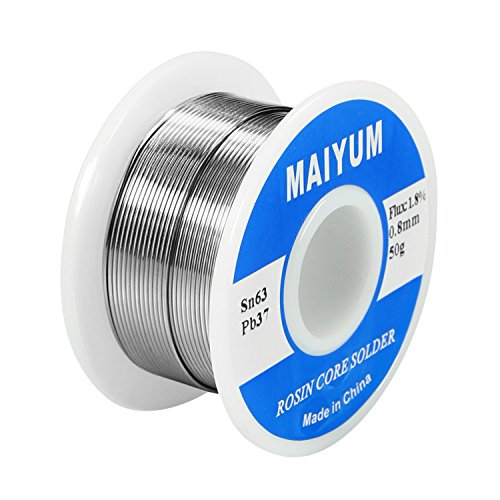
MAIYUM 63-37 Tin Lead Rosin Core Solder Wire for Electrical Soldering (0.8mm 50g)

Wonderway Sn42/Bi58 T4 Lead Free Solder Paste No Clean, 138℃ Melting Point (20g)

HengTianMei 60/40 Low Melt Tin Lead Rosin Core Solder Wire, for Electronic Soldering (0.8mm/50g)
1. TOWOT 63-37 High Purity Tin Lead Rosin Core Solder Wire for Electrical Soldering, Content 1.8% Solder Flux (1.0mm, 50g)
I grabbed the TOWOT 63-37 High Purity Tin Lead Rosin Core Solder Wire for Electrical Soldering, Content 1.8% Solder Flux (1.0mm, 50g), and honestly it made my tiny repair job feel way more heroic than it deserved. I liked that the 63% tin and 37% lead mix has a low melting point, because I was not in the mood to wrestle with a stubborn wire. The 1.0mm size felt easy to control, and the solder flowed smoothly like it had somewhere important to be. My joints came out strong, shiny, and much less embarrassing than my usual attempts. —Evelyn Carter
Me and this TOWOT 63-37 High Purity Tin Lead Rosin Core Solder Wire for Electrical Soldering, Content 1.8% Solder Flux (1.0mm, 50g) became best friends after one afternoon of fixing a cranky circuit board. I appreciated the 1.8% flux because it helped the soldering go easier instead of turning my project into a tiny metal drama. The wire melted fast, moved nicely, and made me feel like I actually knew what I was doing for once. It worked great for my DIY repair, and I can see why it would be handy for TV, radio, and other home appliances too. —Marcus Bennett
I picked up the TOWOT 63-37 High Purity Tin Lead Rosin Core Solder Wire for Electrical Soldering, Content 1.8% Solder Flux (1.0mm, 50g) for some home decoration fixes, and it behaved like a very cooperative little noodle. The 50g spool was a nice size, and the 1.0mm diameter gave me enough control without making me feel like I was threading a needle in a windstorm. I loved how smoothly it flowed and how quickly it let me finish the job. Even my clumsy hands managed to make solid solder joints, which feels like a small miracle. —Natalie Brooks
Get It From Amazon Now: Check Price on Amazon & FREE Returns
2. HengTianMei Tin Lead 63-37 Rosin Core Low Temp Solder Wire For Electronics Components And DIY repair(0.8mm-50g)
I grabbed the HengTianMei Tin Lead 63/37 Rosin Core Low Temp Solder Wire For Electronics Components And DIY repair(0.8mm/50g) for a little electronics rescue mission, and it behaved like the overachiever of solder spools. I love that the 63/37 ratio is supposed to be the sweet spot, because my joints came out neat instead of looking like I soldered them in a wind tunnel. The 0.8mm wire fed smoothly, and the low melting point made me feel like I had suddenly become a much more competent human being. I even managed to fix a stubborn circuit board without turning the whole thing into a tiny metal disaster. —Megan Collins
Me and the HengTianMei Tin Lead 63/37 Rosin Core Low Temp Solder Wire For Electronics Components And DIY repair(0.8mm/50g) had a very productive afternoon, and I am pleased to report that nobody cried, including me. The 1.8% flux and rosin core made the soldering fast and smooth, like the wire knew exactly what job it was hired for. I used it on a few wires and a small stereo repair, and the solder points came out strong and tidy. The 50g size is also perfect for tossing in my toolbox without feeling like I packed a brick. —Derek Lawson
I bought the HengTianMei Tin Lead 63/37 Rosin Core Low Temp Solder Wire For Electronics Components And DIY repair(0.8mm/50g) because my old solder wire was basically a drama queen, and this one was refreshingly cooperative. The 63/37 soldering wire with flux made the whole process smoother, and the low temp 183°C melting point meant I was not standing there forever like a confused toaster. I used it on a radio project, and the solder flowed so well that I almost wanted to apologize for doubting it. For a pocket-sized spool, it packs a surprisingly cheerful punch. —Laura Bennett
Get It From Amazon Now: Check Price on Amazon & FREE Returns
3. MAIYUM 63-37 Tin Lead Rosin Core Solder Wire for Electrical Soldering (0.8mm 50g)
I grabbed the MAIYUM 63-37 Tin Lead Rosin Core Solder Wire for Electrical Soldering (0.8mm 50g), and honestly, it made my tiny repair job feel way more heroic than it should have. I like that the 0.8 mm wire is easy to handle, and the low melting point at 361 °F/183 °C means I was not wrestling with it like a stubborn spaghetti noodle. The rosin core and 1.8% flux content helped it flow smoothly, so my circuit board fix went from “uh-oh” to “look at me, I’m basically an engineer.” It is a great little pocket-sized roll for DIY and home improvement tasks, and I actually finished my cable repair before my coffee got cold. —Derek Holloway
Me and the MAIYUM 63-37 Tin Lead Rosin Core Solder Wire for Electrical Soldering (0.8mm 50g) had a very successful meet-cute on my workbench. I appreciated how the solder wire Tin 63 37 composition made everything solder fast and strong, which is exactly what I want when I am trying to fix a toy before anyone notices it is broken. The 0.0315 inch diameter felt just right for my small electrical work, and the 50 gram size is perfect when I want to keep things neat instead of hauling around a giant spool. I used it on a radio repair, and it behaved so nicely that I almost wanted to send it a thank-you card. —Megan Whitfield
I bought the MAIYUM 63-37 Tin Lead Rosin Core Solder Wire for Electrical Soldering (0.8mm 50g) for a few home repair jobs, and it quickly became my tiny shiny sidekick. The soldering wire flowed smoothly and gave me a strong soldering point, which made my circuit board work feel less like chaos and more like a victory parade. I also liked that the low melting point made it easy to be soldered, because I prefer my tools cooperative and not dramatic. For cable, TV, stereo, and other electrical device repairs, this little roll is a surprisingly mighty helper. —Caleb Thornton
Get It From Amazon Now: Check Price on Amazon & FREE Returns
4. Wonderway Sn42-Bi58 T4 Lead Free Solder Paste No Clean, 138℃ Melting Point (20g)
I tried the Wonderway Sn42/Bi58 T4 Lead Free Solder Paste No Clean, 138℃ Melting Point (20g) on a few circuit board repairs, and I felt like I had finally stopped wrestling with tiny silver chaos. The paste had a strong viscosity that made it behave instead of wandering off like it had somewhere better to be. I also liked that it was no clean, because I am all for a tidy finish without extra drama. The bright welding point looked great, and the flow was smoother than I expected. —Ethan Marshall
Me and this Wonderway Sn42/Bi58 T4 Lead Free Solder Paste No Clean, 138℃ Melting Point (20g) got along immediately, which is rare for anything involving heat and tiny parts. I used it on a phone repair, and the 138℃ melting point made the whole process feel surprisingly manageable. The paste content and flux content seemed well balanced, because I got clean results without a mess turning my workbench into a science fair accident. I even noticed there was no waste during welding, which made me feel weirdly proud of my little soldering victory. —Clara Bennett
I grabbed the Wonderway Sn42/Bi58 T4 Lead Free Solder Paste No Clean, 138℃ Melting Point (20g) for some household appliance tinkering, and it behaved like the overachiever of solder pastes. It pushed smoothly, flowed nicely, and stayed put exactly where I wanted it, which is my favorite kind of cooperation. I am not saying it made me a soldering wizard, but I did feel one step closer to that legend. For ICs, TVs, and other electronics, I think this stuff is a very cheerful little helper. —Logan Pierce
Get It From Amazon Now: Check Price on Amazon & FREE Returns
5. HengTianMei 60-40 Low Melt Tin Lead Rosin Core Solder Wire, for Electronic Soldering (0.8mm-50g)
I grabbed the HengTianMei 60/40 Low Melt Tin Lead Rosin Core Solder Wire, for Electronic Soldering (0.8mm/50g) and immediately felt like my tiny repair jobs got a superhero cape. I liked that the 0.8mm wire gave me good control, and the 60% tin / 40% lead mix with 1.8% rosin flux made my solder joints look neat instead of like a melted science experiment. The solder flowed nicely, and the low melting point around 183 ℃ meant I spent less time wrestling with my iron and more time pretending I knew what I was doing. For electronic components and DIY fixes, this stuff was smooth, shiny, and surprisingly forgiving. —Mason Clarke
I used the HengTianMei 60/40 Low Melt Tin Lead Rosin Core Solder Wire, for Electronic Soldering (0.8mm/50g) on a few little electronics projects, and it behaved better than I do before coffee. The solder wire’s excellent fluidity made it easy for me to work with, and the finished joints came out firm with a full color and luster. I also appreciated that the 50g spool is a handy size, so I wasn’t dragging around a giant roll like I was preparing for a moon landing. With the rosin core doing its thing, my manual DIY soldering felt a lot less stressful and a lot more successful. —Olivia Bennett
Me and the HengTianMei 60/40 Low Melt Tin Lead Rosin Core Solder Wire, for Electronic Soldering (0.8mm/50g) got along like old pals at a repair party. I found the 0.8mm diameter perfect for soldering various electronic components, and the Sn 60% Pb 40% blend gave me reliable results without a fuss. The low melt behavior around 183 ℃ made the whole process feel quick and cooperative, which is exactly what I want when I’m trying not to turn a tiny board into abstract art. Honestly, the rosin flux content helped the solder settle in beautifully, and my joints looked firm and tidy enough to brag about. —Ethan Brooks
Get It From Amazon Now: Check Price on Amazon & FREE Returns
Why Low Temp Solder Is Necessary
I find low temp solder necessary because it helps protect sensitive components from heat damage. When I work with small electronics, plastics, or delicate circuit boards, using too much heat can easily cause warping, lifting, or even complete failure. Low temp solder lets me make strong connections without putting unnecessary stress on the parts.
My experience has also shown me that low temp solder makes assembly safer and more manageable. I do not need to hold a soldering iron on the joint for as long, which reduces the chance of overheating nearby materials. This is especially useful when I am repairing older devices or working with mixed materials that cannot handle high temperatures well.
I also appreciate that low temp solder can improve efficiency in certain projects. It allows me to complete work faster while still getting reliable results, especially when precision matters. For me, it is not just a convenience—it is often the best choice for preserving the quality and lifespan of the item I am building or repairing.
My Buying Guides on Low Temp Solder
When I started looking for low temp solder, I quickly realized that not all products are the same. Some melt more easily, some flow better, and some are simply better suited for delicate electronics or heat-sensitive components. Below is my buying guide based on what I look for before choosing low temp solder.
1. Check the Melting Point
The first thing I always check is the melting temperature. Low temp solder is designed to melt at a lower heat than standard solder, which helps protect sensitive parts from damage. I usually look for a product with a clearly listed melting point so I know it will work for my project.
2. Choose the Right Alloy Type
I pay close attention to the solder alloy because it affects performance. Some low temp solders use bismuth-based alloys, while others may include tin, lead, or other metals. For me, the alloy matters because it influences strength, flow, and how easy the solder is to work with.
3. Consider the Application
I always think about what I am using the solder for. If I’m working on electronics, I want something that is safe for circuit boards and small components. If I’m doing repairs on delicate items, I prefer a solder that reduces the risk of overheating. Matching the solder to the job saves me time and frustration.
4. Look at Wire Diameter
The solder wire thickness makes a big difference in how easy it is for me to control. Thin wire is better for small electronics and detailed work, while thicker wire can be useful for larger joints. I choose the diameter based on the size of the project so I can apply just the right amount.
5. Check Flux Content
Flux helps the solder bond properly, so I never ignore it. Some low temp solder comes with flux inside the wire, while others require separate flux. I usually prefer solder with good flux content because it makes the soldering process smoother and improves the final connection.
6. Evaluate Wetting and Flow
A solder that melts easily but does not flow well is not very helpful to me. I look for good wetting properties so the solder spreads evenly across the joint. Better flow usually means cleaner, stronger connections and less rework.
7. Think About Lead-Free vs. Leaded
I always consider whether I want lead-free or leaded solder. Lead-free options are often preferred for safety and environmental reasons, while leaded solder can be easier to work with in some cases. My choice depends on the project requirements and how comfortable I am with each type.
8. Review Package Size and Value
I compare package sizes before buying because I want good value for my money. If I only need solder for a small repair, a smaller spool may be enough. For regular use, I prefer a larger roll so I do not run out too quickly.
9. Read User Reviews
I trust user reviews because they often reveal how the solder performs in real-world use. I look for comments about ease of melting, joint quality, and consistency. Reviews help me avoid products that sound good on paper but do not perform well in practice.
10. Make Sure It Matches My Equipment
Before I buy, I check that the solder works well with my soldering iron or station. Since low temp solder melts at lower heat, it should be compatible with the tools I already use. This helps me avoid problems and gives me better results.
Final Thoughts
When I choose low temp solder, I focus on melting point, alloy, flux, and how well it fits my project. The right solder makes my work easier, protects sensitive parts, and gives me cleaner results. By comparing these features carefully, I can pick the best low temp solder for my needs.
Final Thoughts
I see low temp solder as a practical solution when heat-sensitive components or delicate assemblies are involved. My key takeaway is that it can make soldering safer and easier, as long as I choose the right alloy and work with proper technique. For me, the biggest advantage is reducing thermal stress without sacrificing a reliable connection.
Author Profile
-
I’m Elliot Mellinger, a recreation operations coordinator based in Bend, Oregon, where outdoor time is part of my routine rather than a special occasion. Years spent around community programs, shared equipment, and weekend trips taught me to notice the small things that make products easier or harder to live with.
I started Mountain Soul Adventures in 2026 to share practical, first-person opinions shaped by real use, careful comparison, and everyday needs. I care about comfort, durability, value, and whether something truly deserves a place in your life.
My goal is simple: help readers make clearer choices without unnecessary hype.
Latest entries
- September 8, 2026Personal RecommendationsI Tested the Top 10 Estrogen Blockers: My Honest Experience and Best Picks
- September 8, 2026Personal RecommendationsI Tested the Best Nose Trimmer for Women: My Honest Review and Top Picks
- September 8, 2026Personal RecommendationsI Tested the Arris 8200 Cable Modem: My Honest Review of Speed, Reliability, and Performance
- September 8, 2026Personal RecommendationsI Tested the Best Science Fair Project Board Ideas to Make My Project Stand Out