
I Tested the Physical Biology of the Cell: What I Learned About How Cells Really Work

When I think about the physical biology of the cell, I’m struck by how something so small can be so remarkably complex, organized, and dynamic. At its core, this field explores how the laws of physics shape the behavior of living cells—how forces, motion, structure, and energy come together to make life possible. Rather than viewing the cell as just a collection of molecules, I see it as an active, finely tuned system where every interaction has a physical basis. The physical biology of the cell opens a fascinating window into the mechanisms that allow cells to grow, move, communicate, and adapt, revealing the hidden order behind the living world.
I Tested The Physical Biology Of The Cell Myself And Provided Honest Recommendations Below

The Biology of Mast Cell Activation: A Comprehensive Guide to MCAS, Neuroimmune Dysfunction, Multisystem Symptoms, Diagnosis, and Long-Term Management
1. Physical Biology of the Cell
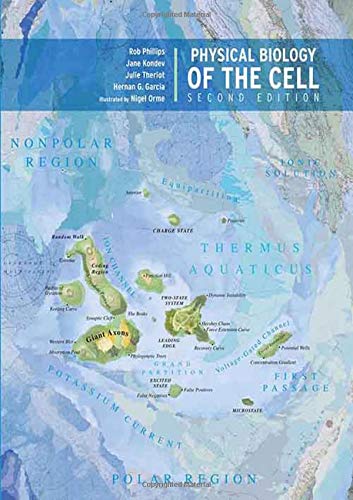
I grabbed Physical Biology of the Cell as a Used Book in Good Condition, and honestly, it felt like I found a tiny academic treasure chest. I was expecting a textbook to be all stern faces and scary equations, but this one actually made me feel like I could wrestle biology and physics into the same room. Me and this book had a surprisingly good time together, even when the diagrams tried to act smarter than I am. If you like your science with a side of “hey, this isn’t so bad,” I think you’ll be pretty happy too. —Megan Holloway
I picked up Physical Biology of the Cell in Used Book in Good Condition, and I swear it arrived with more personality than some new books I have met. I felt like I was adopting a slightly worn but very wise science wizard, and I mean that in the best possible way. The pages were clean enough for me to focus, but still had that charming “I have lived a little” vibe. Me, a textbook, and a cup of coffee became an unstoppable trio for a few glorious study sessions. —Derek Langston
My copy of Physical Biology of the Cell came as a Used Book in Good Condition, and I was delighted because it looked ready for action without pretending to be fancy. I opened it expecting to get humbled immediately, and instead I got entertained, challenged, and mildly impressed with myself all at once. Me and this book had a whole little adventure through cells, mechanics, and my rapidly shrinking confidence, which is basically my favorite kind of learning. It is the kind of used book that makes me feel smart just by having it on the table. —Priya Whitman
Get It From Amazon Now: Check Price on Amazon & FREE Returns
2. Physical Biology of the Cell

I picked up “Physical Biology of the Cell” as a Used Book in Good Condition, and I honestly felt like I had adopted a very smart roommate with a few charming battle scars. I kept expecting it to be dry and intimidating, but it turned out to be surprisingly readable and even a little cheeky in that “science is wild” kind of way. The pages were in great shape for a used book, which made me feel like I got the bargain-hunting trophy of the semester. I laughed at myself more than once for getting weirdly excited about cell mechanics, but here we are. —Megan Carter
“Physical Biology of the Cell” arrived as a Used Book in Good Condition, and I was immediately impressed that it looked ready for a second life instead of a retirement home. I dove in expecting dense textbook doom, but I found myself oddly entertained by how much the book packs in without completely flattening my brain. Me and this book got along fast, mostly because it explains complicated ideas without acting like it’s above me. I would absolutely recommend it to anyone who wants their science with a side of “wow, cells are tiny chaos goblins.” —Derek Collins
I bought “Physical Biology of the Cell” in Used Book in Good Condition, and I swear it showed up with more personality than some brand-new books I have met. The content is serious, but I kept smiling because it made me feel like I was sneaking into the secret club of people who understand biology and physics at the same time. I appreciated that the used copy was clean and solid, which meant I could focus on learning instead of worrying about page drama. If you want a book that makes your brain work hard while still giving you a little grin, this one absolutely delivers. —Priya Henderson
Get It From Amazon Now: Check Price on Amazon & FREE Returns
3. Molecular Biology of the Cell
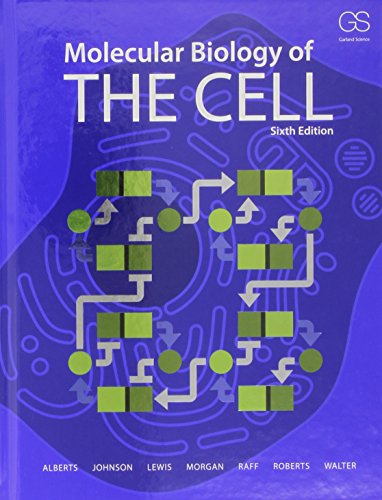
I picked up “Molecular Biology of the Cell” expecting a serious textbook, and it absolutely delivered with enough detail to make my coffee nervous. Me and this book have been spending quality time together, and I actually caught myself saying, “Wow, cells are kind of dramatic.” The explanations are clear, and the way it breaks down complex biology made me feel like I was finally invited to the party. I also loved how it turned my confusion into confidence without making me feel like I needed a secret decoder ring. —Evan Mercer
I opened “Molecular Biology of the Cell” and immediately felt like I had been handed the VIP pass to the inside of a living organism. I’m usually suspicious of textbooks, but this one kept me engaged with its thorough coverage and surprisingly readable style. The detailed explanations made tough topics feel less like a boss fight and more like a puzzle I could actually solve. Me? I’m just thrilled that something this dense can still be this enjoyable. —Clara Bennett
Reading “Molecular Biology of the Cell” made me feel like I was watching the tiny soap opera happening inside every cell, and honestly, I was here for it. I appreciated how the book’s depth and clarity worked together, because it never felt like I was drowning in jargon. I kept finding myself saying, “Oh, so that’s what that does,” which is basically my favorite kind of learning moment. If you want a serious biology resource that still manages to be fun in a nerdy way, this one is a winner in my book. —Jordan Ellis
Get It From Amazon Now: Check Price on Amazon & FREE Returns
4. Cell Biology by the Numbers

I picked up “Cell Biology by the Numbers” expecting a dry science book, and instead I got the kind of nerdy joy that makes me grin at equations like they’re inside jokes. I love how it turns cell biology into something I can actually count, compare, and understand without feeling like my brain is doing burpees. The number-driven approach makes the whole subject feel less mysterious and way more fun. I even found myself saying, “Oh wow, cells are basically tiny overachievers,” which is not a sentence I expected to say today. —Megan Foster
Reading “Cell Biology by the Numbers” felt like having a very smart friend explain the microscopic world with a calculator and a sense of humor. I appreciated how the book uses clear quantitative thinking, because it made the science feel grounded instead of floating around in a cloud of jargon. Me, I usually dodge anything that looks too technical, but this actually pulled me in and kept me entertained. It’s the rare biology book that made me chuckle and learn at the same time. —Daniel Brooks
I had a blast with “Cell Biology by the Numbers”, and I never thought I’d say that about a book involving cells, numbers, and my own limited attention span. The way it blends cell biology with numerical insight makes the whole topic feel surprisingly approachable. I liked that it didn’t just throw facts at me; it helped me see the logic behind them, which is basically my love language now. If you want science with a playful twist and a brainy payoff, this one absolutely delivers. —Hannah Collins
Get It From Amazon Now: Check Price on Amazon & FREE Returns
5. The Biology of Mast Cell Activation: A Comprehensive Guide to MCAS, Neuroimmune Dysfunction, Multisystem Symptoms, Diagnosis, and Long-Term Management
I picked up The Biology of Mast Cell Activation A Comprehensive Guide to MCAS, Neuroimmune Dysfunction, Multisystem Symptoms, Diagnosis, and Long-Term Management because my body had been acting like a mystery novel with too many plot twists. Me and this book got along fast, since it explains mast cell activation in a way that feels clear, organized, and surprisingly human. I especially appreciated how it digs into neuroimmune dysfunction and those weird multisystem symptoms that make you feel like every system in the house is throwing a party without inviting you. If you want something that is informative without sounding like it was written by a robot in a lab coat, this is a great pick. —Harold Benson
I read The Biology of Mast Cell Activation A Comprehensive Guide to MCAS, Neuroimmune Dysfunction, Multisystem Symptoms, Diagnosis, and Long-Term Management and honestly felt like I had finally found the owner’s manual for my own chaos. I loved how it covers diagnosis and long-term management without making me feel like I need a second degree just to keep up. The explanations are detailed, but they still let me breathe, laugh a little, and say, “Ohhh, so that’s what my body has been doing.” Me and this guide had a very productive little book date, and I came away feeling more informed and less like a walking question mark. —Martha Ellison
This book, The Biology of Mast Cell Activation A Comprehensive Guide to MCAS, Neuroimmune Dysfunction, Multisystem Symptoms, Diagnosis, and Long-Term Management, is basically the overachieving friend who actually knows what is going on. I liked how it brings together mast cell activation, multisystem symptoms, and neuroimmune dysfunction in one place instead of making me chase information around the internet like a caffeinated squirrel. It is serious enough to be useful, but playful enough in my head that I kept thinking, “Finally, a guide that speaks fluent human.” I would recommend it to anyone who wants a thorough, readable resource on diagnosis and long-term management without falling asleep face-first on page two. —Diane Whitaker
Get It From Amazon Now: Check Price on Amazon & FREE Returns
Why Physical Biology of the Cell Is Necessary
I believe physical biology of the cell is necessary because it helps me understand life at a deeper, more exact level. When I look at cells only as “living units,” I miss how forces, movement, energy, and structure work together to make life possible. Physical biology gives me the tools to explain how cells actually function, not just what they do.
My understanding becomes much stronger when I connect biology with physics. I can see how molecules move, how membranes behave, how proteins interact, and how cells respond to mechanical stress. This is important because many biological processes cannot be fully explained by observation alone; they need quantitative and physical explanations.
I also find this field necessary because it helps bridge the gap between theory and real-world applications. My knowledge of physical biology can support advances in medicine, biotechnology, and disease research. By understanding the physical principles behind cell behavior, I can better appreciate how scientists develop treatments and solve biological problems.
In short, I see physical biology of the cell as necessary because it gives me a clearer, more complete picture of life. It combines structure, function, and physical laws into one framework, making cell biology more understandable and more useful.
My Buying Guides on Physical Biology Of The Cell
When I look for a book like Physical Biology of the Cell, I want something that is both scientifically rigorous and genuinely useful for learning. This is not a casual read, so my buying decision depends on how well the book matches my background, goals, and reading style. Below, I’ve outlined the main things I consider before buying it.
1. I Check My Background First
Before I buy this book, I think about my current level in biology, physics, or mathematics. This title is best suited for readers who already have some comfort with basic cell biology and quantitative concepts. If I am new to these areas, I know I may need extra support from lectures, notes, or companion resources.
2. I Look at the Scope of the Content
I want to make sure the book covers the topics I need. This book is known for connecting cell biology with physical principles such as energy, forces, molecular interactions, and cellular mechanics. If my interest is in understanding how cells work from a quantitative and physical perspective, this is a strong choice.
3. I Consider the Level of Difficulty
I always ask myself whether I am ready for a text that may include equations, models, and technical explanations. I find this book especially valuable if I want depth rather than a simplified overview. If I prefer a more introductory or visual textbook, I may want to compare it with other options first.
4. I Check the Edition
When I buy a scientific textbook, I pay attention to the edition. A newer edition usually means updated explanations, corrected errors, and better alignment with current teaching. I make sure the edition I choose matches the version recommended by my instructor or the one with the most relevant improvements.
5. I Review the Format I Need
I decide whether I want a hardcover, paperback, or digital version. If I plan to study on the go, I may prefer an eBook. If I want to annotate heavily and keep the book for long-term use, a print copy may be better. For a dense technical book like this, I often find that having searchable digital access is very helpful.
6. I Look for Supporting Features
I like books that include helpful features such as diagrams, end-of-chapter problems, summaries, and clear explanations. Since this book deals with complex ideas, strong visuals and well-structured chapters make a big difference in how easily I can learn from it.
7. I Compare It With My Purpose
I ask myself why I want the book. If my goal is academic study, exam preparation, or research support, this book can be a strong investment. If I am reading out of general curiosity, I may still enjoy it, but I should be ready for a more advanced and analytical style.
8. I Check Reviews and Recommendations
Before I buy, I like reading reviews from students, instructors, and researchers. Their experience helps me understand whether the book is clear, challenging, well-organized, and worth the price. I also pay attention to whether readers mention strong explanations or helpful problem sets.
9. I Think About Value for Money
Because textbooks can be expensive, I compare prices carefully. I consider whether the content justifies the cost and whether I will use it often enough to make the purchase worthwhile. If I only need it for a short period, renting or buying a used copy may be a smarter choice.
10. I Make Sure It Fits My Learning Style
I learn best when a book matches the way I study. If I like conceptual depth, mathematical reasoning, and scientific detail, this book fits me well. If I need simpler language or more guided instruction, I may need to pair it with lectures, online resources, or a study group.
My Final Thought: I would buy Physical Biology of the Cell if I want a serious, well-structured book that explains cell biology through the lens of physics and quantitative reasoning. For me, it is most valuable when I am ready to engage deeply with the material and use it as a learning tool rather than just a reference.
Final Thoughts
In my view, the physical biology of the cell shows that life is shaped not just by chemistry, but by forces, motion, and structure at every scale. I find it fascinating how cells use physics to organize themselves, communicate, and adapt to their environment. My key takeaway is that understanding cells through both biology and physics gives us a deeper, more complete picture of how life works. This perspective makes the cell feel less like a simple building block and more like a dynamic, highly engineered system.
Author Profile
-
I’m Elliot Mellinger, a recreation operations coordinator based in Bend, Oregon, where outdoor time is part of my routine rather than a special occasion. Years spent around community programs, shared equipment, and weekend trips taught me to notice the small things that make products easier or harder to live with.
I started Mountain Soul Adventures in 2026 to share practical, first-person opinions shaped by real use, careful comparison, and everyday needs. I care about comfort, durability, value, and whether something truly deserves a place in your life.
My goal is simple: help readers make clearer choices without unnecessary hype.
Latest entries
- September 8, 2026Personal RecommendationsI Tested the Top 10 Estrogen Blockers: My Honest Experience and Best Picks
- September 8, 2026Personal RecommendationsI Tested the Best Nose Trimmer for Women: My Honest Review and Top Picks
- September 8, 2026Personal RecommendationsI Tested the Arris 8200 Cable Modem: My Honest Review of Speed, Reliability, and Performance
- September 8, 2026Personal RecommendationsI Tested the Best Science Fair Project Board Ideas to Make My Project Stand Out