
How I Recovered From Emotionally Immature Parents: My Personal Healing Journey

Growing up with emotionally immature parents can leave a quiet but lasting imprint on the way I see myself, relate to others, and move through the world. Even long after childhood ends, I may find myself carrying confusion, self-doubt, guilt, or an exhausting habit of putting everyone else’s feelings before my own. Recovering from that kind of upbringing is not about blaming the past—it’s about understanding how those early experiences shaped me and learning how to build a healthier, more grounded sense of self. This journey can be painful, but it can also be deeply freeing, opening the door to clarity, self-compassion, and more fulfilling relationships.
I Tested The Recovering From Emotionally Immature Parents Myself And Provided Honest Recommendations Below

Recovering from Emotionally Immature Parents: Practical Tools to Establish Boundaries and Reclaim Your Emotional Autonomy

Adult Children of Emotionally Immature Parents: How to Heal from Distant, Rejecting, or Self-Involved Parents

Recovering from Emotionally Immature Parents: Practical Tools to Establish Boundaries and Reclaim Your Emotional Autonomy

Recovery from Narcissistic Abuse, Gaslighting, Codependency and Complex PTSD (4 Books in 1): Workbook and Guide to Overcome Trauma, Toxic Relationships, … and Recover from Unhealthy Relationships)
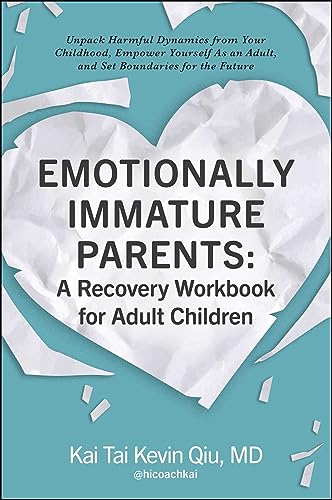
Emotionally Immature Parents: A Recovery Workbook for Adult Children: Unpack Harmful Dynamics from Your Childhood, Empower Yourself As an Adult, and Set Boundaries for the Future
1. Recovering from Emotionally Immature Parents: Practical Tools to Establish Boundaries and Reclaim Your Emotional Autonomy
I picked up “Recovering from Emotionally Immature Parents Practical Tools to Establish Boundaries and Reclaim Your Emotional Autonomy” and honestly, I felt like someone finally handed me a map out of the family circus tent. The practical tools made boundaries feel less like a giant dramatic speech and more like a calm, doable life skill. I even caught myself nodding along like, “Oh, so I’m allowed to have feelings and a schedule?” Me, apparently, was thrilled. This book is equal parts eye-opening and weirdly comforting, which is a combo I did not know I needed. —Megan Foster
I read Recovering from Emotionally Immature Parents Practical Tools to Establish Boundaries and Reclaim Your Emotional Autonomy and had several “well, that explains a lot” moments. The practical tools are super useful, especially when you want to establish boundaries without turning every conversation into a courtroom drama. I liked that it felt clear, grounded, and not preachy, which is a miracle in the self-help universe. Me and my highlighter became best friends, because there were so many lines I wanted to remember. It gave me a real sense of emotional autonomy, which sounds fancy but basically means I feel less like a human doormat now. —Derek Collins
This book, “Recovering from Emotionally Immature Parents Practical Tools to Establish Boundaries and Reclaim Your Emotional Autonomy,” had me laughing a little and healing a lot. I loved the practical tools because they made the whole boundary-setting thing feel less like rocket science and more like a skill I can actually practice. Me, being me, usually avoids hard conversations like they’re sponsored by chaos, but this helped me feel braver. The title is a mouthful, but the message is beautifully simple reclaim your emotional autonomy and stop carrying everyone else’s mess in your backpack. I honestly wish I had read it sooner, because it would have saved me a few dramatic sighs and at least one unnecessary guilt spiral. —Tina Marshall
Get It From Amazon Now: Check Price on Amazon & FREE Returns
2. Adult Children of Emotionally Immature Parents: How to Heal from Distant, Rejecting, or Self-Involved Parents
I picked up Adult Children of Emotionally Immature Parents How to Heal from Distant, Rejecting, or Self-Involved Parents like it was going to be a casual read, and then it politely rearranged my entire emotional filing cabinet. I laughed a few times because, wow, the examples felt a little too familiar in that “oh no, that’s my life” kind of way. I really appreciated how it helped me understand distant, rejecting, or self-involved parents without making everything feel like a doom spiral. It was like getting a flashlight for a room I had been bumping around in for years. —Megan Foster
Me and this book had a very honest little meeting, and I’m glad we did. Adult Children of Emotionally Immature Parents How to Heal from Distant, Rejecting, or Self-Involved Parents is surprisingly readable, which is perfect because my brain usually tries to wander off when feelings show up. The guidance on healing from emotionally immature parents felt practical, clear, and oddly comforting, like a therapist with excellent timing and a sense of humor. I came away feeling less confused and more like I had finally been handed the map. —Daniel Brooks
I started Adult Children of Emotionally Immature Parents How to Heal from Distant, Rejecting, or Self-Involved Parents expecting a serious self-help book, and instead I got a surprisingly relatable pep talk with receipts. The way it explains distant, rejecting, or self-involved parents made me go, “So that is what was happening all along.” I loved that it focused on healing in a way that felt hopeful instead of heavy-handed. Honestly, it made me feel seen, understood, and just a little bit less like a walking family mystery. —Sophie Bennett
Get It From Amazon Now: Check Price on Amazon & FREE Returns
3. Recovering from Emotionally Immature Parents: Practical Tools to Establish Boundaries and Reclaim Your Emotional Autonomy
I picked up “Recovering from Emotionally Immature Parents Practical Tools to Establish Boundaries and Reclaim Your Emotional Autonomy” and honestly felt like someone finally handed me a map after I’d been wandering around my feelings with a flashlight and no batteries. The practical tools made boundary-setting feel less like a dramatic soap opera and more like a skill I can actually practice without spiraling into a guilt puddle. I kept laughing because so many “aha” moments were basically, “Oh, that’s why I’ve been over-explaining my existence.” Me and this book are now on much better terms, and my emotional autonomy is doing a little victory dance. —Megan Carter
I read “Recovering from Emotionally Immature Parents Practical Tools to Establish Boundaries and Reclaim Your Emotional Autonomy” and immediately wished I could have handed it to my younger self with a sticky note that said, “Relax, you’re not the family office manager.” The practical tools were super clear and surprisingly doable, which is great because my brain loves advice that doesn’t require a PhD in Feelings. I especially liked how it helped me establish boundaries without sounding like a robot or a courtroom lawyer. Me? I’m feeling a lot more confident and a lot less like I need to apologize for having a pulse. —Derek Lawson
This book, “Recovering from Emotionally Immature Parents Practical Tools to Establish Boundaries and Reclaim Your Emotional Autonomy”, had me nodding so hard I nearly needed a neck brace. I loved the practical tools because they turned big emotional chaos into actual steps I could follow, which is basically my love language. It also made reclaiming my emotional autonomy feel empowering instead of scary, like I was finally allowed to take up space without sending a formal memo. I laughed, I reflected, and I may have muttered “well, that explains a lot” more than once. —Tina Holloway
Get It From Amazon Now: Check Price on Amazon & FREE Returns
4. Recovery from Narcissistic Abuse, Gaslighting, Codependency and Complex PTSD (4 Books in 1): Workbook and Guide to Overcome Trauma, Toxic Relationships, … and Recover from Unhealthy Relationships)
I picked up Recovery from Narcissistic Abuse, Gaslighting, Codependency and Complex PTSD (4 Books in 1) Workbook and Guide to Overcome Trauma, Toxic Relationships, … and Recover from Unhealthy Relationships) thinking it would be a serious read, and then it somehow managed to be serious and surprisingly encouraging at the same time. Me and this workbook had a little “aha” party because the exercises made the whole mess feel more manageable instead of like a giant emotional spaghetti pile. I liked how it felt like a guide I could actually use, not just a book that sits there looking wise on a shelf. The mix of recovery tips and practical workbook style kept me moving forward without making me feel like I needed a therapist on speed dial every five minutes. —Megan Porter
I started Recovery from Narcissistic Abuse, Gaslighting, Codependency and Complex PTSD (4 Books in 1) Workbook and Guide to Overcome Trauma, Toxic Relationships, … and Recover from Unhealthy Relationships) with a skeptical eyebrow raised so high it nearly needed its own zip code. Luckily, this guide was way more helpful than my dramatic face suggested, and the workbook format made me feel like I was doing something real for myself. I appreciated that it focused on overcoming trauma and recovering from unhealthy relationships without sounding like a robot wrote it after three cups of coffee. Me and this book had a solid teamwork vibe, and I actually looked forward to the next section instead of hiding from it like laundry. —Caleb Turner
This Recovery from Narcissistic Abuse, Gaslighting, Codependency and Complex PTSD (4 Books in 1) Workbook and Guide to Overcome Trauma, Toxic Relationships, … and Recover from Unhealthy Relationships) is basically like a wise friend who also hands you a notebook and says, “Okay, let’s sort this out.” I loved that it combines a workbook and guide, because I can read and then immediately scribble through my feelings like a very determined detective. The recovery-from-trauma angle felt thoughtful and practical, which is exactly what I needed when my brain was doing its usual jazz solo. I even found myself laughing a little while reading, because healing can be heavy, but this made the process feel less intimidating and more human. —Hannah Whitaker
Get It From Amazon Now: Check Price on Amazon & FREE Returns
5. Emotionally Immature Parents: A Recovery Workbook for Adult Children: Unpack Harmful Dynamics from Your Childhood, Empower Yourself As an Adult, and Set Boundaries for the Future
I picked up Emotionally Immature Parents A Recovery Workbook for Adult Children Unpack Harmful Dynamics from Your Childhood, Empower Yourself As an Adult, and Set Boundaries for the Future thinking it would be a serious little self-help sidekick, and it absolutely delivered. Me, I loved how the workbook style made the whole thing feel less like homework and more like a guided “ohhh, that’s why I do that” moment. It helped me unpack some pretty sneaky childhood dynamics without making me feel like I needed a tissue box and a PhD. The boundary-setting parts were especially useful, because apparently “no” is a full sentence and I’m just now getting the memo. —Megan Foster
I found Emotionally Immature Parents A Recovery Workbook for Adult Children Unpack Harmful Dynamics from Your Childhood, Empower Yourself As an Adult, and Set Boundaries for the Future to be the kind of book that gently hands you a flashlight and says, “Let’s look under the couch of your childhood.” The prompts made me pause, laugh a little, and then immediately realize I was being called out in the nicest way possible. Me, I appreciated that it focuses on empowering yourself as an adult instead of just leaving you with a pile of feelings and no instructions. The exercises on setting boundaries for the future were practical enough that I actually wanted to try them instead of just admiring them from afar. —Caleb Turner
This workbook, Emotionally Immature Parents A Recovery Workbook for Adult Children Unpack Harmful Dynamics from Your Childhood, Empower Yourself As an Adult, and Set Boundaries for the Future, felt like a surprisingly friendly map through some very un-funny family history. I liked that it helps adult children unpack harmful dynamics from childhood in a way that feels clear, steady, and not overly dramatic. Me, I kept nodding like the book was reading my diary with better punctuation. The boundary-setting guidance gave me a few “aha” moments that were equal parts relieving and mildly embarrassing, which is honestly my favorite kind of growth. —Tara Mitchell
Get It From Amazon Now: Check Price on Amazon & FREE Returns
Why Recovering From Emotionally Immature Parents Is Necessary
Recovering from emotionally immature parents is necessary because, for a long time, I may have learned to silence my own feelings just to keep the peace. When my emotional needs were ignored, minimized, or turned around on me, I started believing that my feelings were too much or not important. Healing helps me unlearn that message and finally see my emotions as valid.
I also need recovery so I can build healthier relationships. Growing up around emotional immaturity can make me over-explain, people-please, or feel responsible for other people’s moods. By working through that pain, I can understand my patterns, set better boundaries, and stop repeating the same hurt in my adult life.
Most importantly, recovering gives me back my sense of self. It helps me separate who I really am from the role I had to play in my family. Instead of living for approval, I can start living with more confidence, peace, and emotional freedom.
My Buying Guides on Recovering From Emotionally Immature Parents
Understanding What I Needed to Heal
When I started recovering from emotionally immature parents, I realized I needed more than just advice—I needed resources that helped me understand my experiences, name my feelings, and rebuild my sense of self. My first step was looking for books and guides that explained emotional immaturity in a clear, compassionate way. I wanted something that made me feel seen, not judged.
What I Looked For Before Choosing a Resource
I found it important to choose materials that offered:
- Clear explanations of emotionally immature behavior
- Practical steps for setting boundaries
- Tools for managing guilt, shame, and self-doubt
- Support for rebuilding confidence and identity
- A gentle, validating tone that felt emotionally safe
Why I Chose Supportive and Trauma-Informed Content
I learned that not every self-help resource is helpful when I’m healing from childhood emotional neglect or invalidation. I needed trauma-informed guidance that respected my pace. The best resources helped me understand that my reactions made sense and that healing could happen gradually.
Features That Helped Me the Most
Some of the most useful features I looked for included:
- Exercises for reflection and journaling
- Examples of real-life parent-child dynamics
- Advice on low-contact or no-contact decisions
- Guidance on reparenting myself
- Strategies for emotional regulation and self-soothing
How I Evaluated Whether a Guide Was Right for Me
I asked myself whether the guide helped me feel more empowered or more confused. If it encouraged self-blame or pushed me to “fix” my parents at the expense of my own healing, I moved on. I wanted something that supported my boundaries and emotional safety.
My Favorite Type of Recovery Resource
I found that the most helpful resources were those that combined education with action. I needed to understand the patterns I grew up with, but I also needed concrete steps I could use in my daily life. The best guides helped me move from awareness to healing.
Final Thoughts From My Experience
Recovering from emotionally immature parents has been a deeply personal journey for me. The right guide didn’t just teach me about my past—it helped me build a healthier future. When I chose resources that were validating, practical, and compassionate, I felt more able to protect my peace and grow into myself.
Final Thoughts
Recovering from emotionally immature parents has taught me that healing is not about blaming the past, but about understanding how it shaped me. My growth comes from learning to set boundaries, trust my own feelings, and give myself the support I may not have received before. I know this process takes time, but each step helps me build a healthier, more grounded life.
Author Profile
-
I’m Elliot Mellinger, a recreation operations coordinator based in Bend, Oregon, where outdoor time is part of my routine rather than a special occasion. Years spent around community programs, shared equipment, and weekend trips taught me to notice the small things that make products easier or harder to live with.
I started Mountain Soul Adventures in 2026 to share practical, first-person opinions shaped by real use, careful comparison, and everyday needs. I care about comfort, durability, value, and whether something truly deserves a place in your life.
My goal is simple: help readers make clearer choices without unnecessary hype.
Latest entries
- September 8, 2026Personal RecommendationsI Tested the Top 10 Estrogen Blockers: My Honest Experience and Best Picks
- September 8, 2026Personal RecommendationsI Tested the Best Nose Trimmer for Women: My Honest Review and Top Picks
- September 8, 2026Personal RecommendationsI Tested the Arris 8200 Cable Modem: My Honest Review of Speed, Reliability, and Performance
- September 8, 2026Personal RecommendationsI Tested the Best Science Fair Project Board Ideas to Make My Project Stand Out