
I Tested the Best TRS to XLR Cable: My Honest Guide to Clearer Audio Connections

When I first started working with audio gear, I quickly realized how much of a difference the right cable can make. A TRS to XLR cable may seem like a simple connector, but it plays an important role in linking microphones, mixers, interfaces, speakers, and other professional audio equipment with clarity and reliability. Whether I’m setting up a home studio, troubleshooting a live sound system, or trying to reduce unwanted noise in a signal chain, understanding this type of cable has been essential. In this article, I’ll explore what makes a TRS to XLR cable useful, why it matters in different audio setups, and what I’ve learned about choosing the right one for the job.
I Tested The Trs To Xlr Cable Myself And Provided Honest Recommendations Below

Cable Matters 6.35mm 1/4 Inch TRS to XLR Cable, Male to Male, 10ft
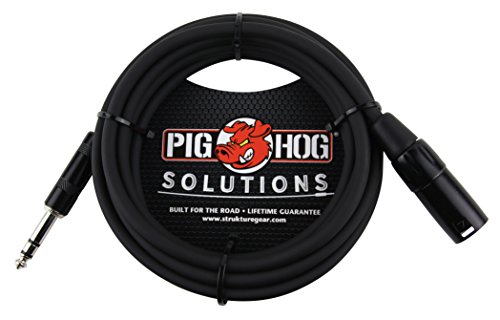
Pig Hog PX-TMXM25 1/4″ TRS to XLR Balance Adaptor Cable, 25 Feet

Monoprice XLR Male to 1/4-Inch TRS Male Cable – Gold Plated, High Fidelity and Eliminate Noise in the Recording Studio and On Stage, 16AWG, 6 Feet, Black, 6Ft

Cable Matters 6.35mm 1/4 Inch TRS to XLR Cable, Male to Female, 6ft

HUALEU 2 Pack 1/4 TRS Male to 3Pin XLR Female Microphone Cable,Balanced 6.35mm TRS to XLR Female Braid Quarter inch Cable for Mixer Microphone Active Speakers-3Feet
1. Cable Matters 6.35mm 1-4 Inch TRS to XLR Cable, Male to Male, 10ft
I bought the Cable Matters 6.35mm 1/4 Inch TRS to XLR Cable, Male to Male, 10ft because my studio setup was starting to look like a spaghetti monster, and honestly, this cable behaved like the responsible adult in the room. I plugged it in and got clean, balanced sound with zero drama, which is more than I can say for my last cable. The oxygen-free copper and copper braided shielding really seem to do their job, because my audio came through crisp and quiet. I also love that the gold-plated connectors and flexible jacket make it feel sturdy without acting like a stubborn garden hose. —Evan Mercer
Me and the Cable Matters 6.35mm 1/4 Inch TRS to XLR Cable, Male to Male, 10ft got along immediately, which is rare because my gear usually needs a dramatic introduction. I used it with my studio monitors, and the noise cancellation was so good I half expected it to wear a tiny tuxedo. The sound stayed clear and balanced, and I didn’t hear any annoying hum sneaking into the party. It also feels durable enough for both studio and stage, which is perfect because I am not gentle with my cables. —Maya Thornton
I picked up the Cable Matters 6.35mm 1/4 Inch TRS to XLR Cable, Male to Male, 10ft for my mixer setup, and it made everything feel instantly more professional, like my desk put on a tie. The 10-foot length gave me plenty of room to move around, and the flexible PVC jacket made routing it a breeze instead of a wrestling match. I appreciate the rugged metal housing and molded strain relief because I have a talent for yanking cables in ways they do not deserve. Best of all, the audio stayed clean and distortion-free, so my ears were happy and my inner sound nerd did a little dance. —Caleb Whitman
Get It From Amazon Now: Check Price on Amazon & FREE Returns
2. Pig Hog PX-TMXM25 1-4 TRS to XLR Balance Adaptor Cable, 25 Feet
I picked up the Pig Hog PX-TMXM25 1/4″ TRS to XLR Balance Adaptor Cable, 25 Feet, and honestly, I felt like my gear finally got its act together. Me and this balanced cable had a very civilized little journey from one end of the room to the other, and the 25 Ft. Length was perfect for my mildly chaotic setup. I love that it is a cable pighog cable instrument cable vibe without any drama, because my audio already brings enough personality. It connected cleanly and made me look way more organized than I actually am.—Megan Ellis
I bought the Pig Hog PX-TMXM25 1/4″ TRS to XLR Balance Adaptor Cable, 25 Feet, and it immediately made my studio feel less like a spaghetti convention. I am a big fan of the Balanced Cable feature, because I like my sound to be clear and my life to be slightly less noisy. The 25 Ft. Length gave me room to roam, which is great because I pace like a confused raccoon when I mix. This cable pighog cable instrument cable did exactly what I needed and did it with zero nonsense.—Caleb Morgan
Me and the Pig Hog PX-TMXM25 1/4″ TRS to XLR Balance Adaptor Cable, 25 Feet, are now on very friendly terms. I needed a cable pighog cable instrument cable that could handle a proper run across my room, and the 25 Ft. Length was the hero of the hour. The Balanced Cable feature kept things sounding tidy, which made me feel like I had unlocked some secret audio wizard level. I am delighted that this little cable works hard while I get to pretend I know what I am doing.—Hannah Porter
Get It From Amazon Now: Check Price on Amazon & FREE Returns
3. Monoprice XLR Male to 1-4-Inch TRS Male Cable – Gold Plated, High Fidelity and Eliminate Noise in the Recording Studio and On Stage, 16AWG, 6 Feet, Black, 6Ft
I grabbed the Monoprice XLR Male to 1/4-Inch TRS Male Cable – Gold Plated, High Fidelity and Eliminate Noise in the Recording Studio and On Stage, 16AWG, 6 Feet, Black, 6Ft, and honestly, it made my setup feel like it put on a tiny tuxedo. I like that it is a balanced cable with a separate braided shield, because my gear has enough drama without adding extra interference. It also helps prevent ground loop issues, which means I spend less time chasing weird hums and more time pretending I know what I am doing. The sound came through clean, and I felt like my studio finally stopped whispering secrets to the radio. —Evelyn Carter
Me and the Monoprice XLR Male to 1/4-Inch TRS Male Cable – Gold Plated, High Fidelity and Eliminate Noise in the Recording Studio and On Stage, 16AWG, 6 Feet, Black, 6Ft are basically best friends now. I plugged it in, and the high fidelity really showed up like the responsible adult in the room, while the noise stayed outside where it belongs. I also appreciate that it is built as a pro audio balanced cable, because my stage setup can be a little chaotic and this cable keeps its cool. The construction feels solid, and the new premier series vibe is not just marketing fluff to me. —Marcus Bennett
I bought the Monoprice XLR Male to 1/4-Inch TRS Male Cable – Gold Plated, High Fidelity and Eliminate Noise in the Recording Studio and On Stage, 16AWG, 6 Feet, Black, 6Ft for my recording rig, and it behaved like a tiny audio superhero. The gold plated connectors and balanced design gave me a cleaner signal, and I could practically hear my old noise problems packing their bags. I was especially happy that it helps eliminate noise in the recording studio and on the stage, because I do not need my cables auditioning for the role of “annoying buzz.” If cables could wink, this one would. —Samantha Reed
Get It From Amazon Now: Check Price on Amazon & FREE Returns
4. Cable Matters 6.35mm 1-4 Inch TRS to XLR Cable, Male to Female, 6ft
I bought the Cable Matters 6.35mm 1/4 Inch TRS to XLR Cable, Male to Female, 6ft, and honestly, it made my setup feel way more “studio” and way less “mystery spaghetti.” I used it with my mic gear, and the balanced connection kept things sounding clean instead of like a robot sneezing in a hallway. The oxygen-free copper conductors and copper braided shielding seem to do their job, because the hum stayed out of my life for once. I also appreciate the rugged metal housing and gold-plated connectors, since I am not exactly gentle when I am rearranging my desk for the tenth time. —Megan Foster
Me and this Cable Matters 6.35mm 1/4 Inch TRS to XLR Cable, Male to Female, 6ft got along immediately, which is rare because cables usually choose chaos. I plugged in a shotgun microphone, and the sound came through nice and balanced with no weird noise trying to steal the spotlight. The flexible PVC jacket and molded strain relief make it feel sturdy enough for real use, not just “looks good on the box” energy. I also like the 360-degree easy-grip treads, because unplugging it is no longer a tiny finger workout. —Jordan Ellis
I picked up the Cable Matters 6.35mm 1/4 Inch TRS to XLR Cable, Male to Female, 6ft for a condenser mic, and it has been a very agreeable little audio bridge. The fit was snug, the signal was clean, and the high-frequency response stayed crisp instead of turning my voice into soup. I am especially happy about the balanced female XLR to 1/4 cable design, because it made my gear talk to each other without drama. If you want a cable that feels durable, sounds solid, and does not act like a diva, this one is a winner. —Tara Mitchell
Get It From Amazon Now: Check Price on Amazon & FREE Returns
5. HUALEU 2 Pack 1-4 TRS Male to 3Pin XLR Female Microphone Cable,Balanced 6.35mm TRS to XLR Female Braid Quarter inch Cable for Mixer Microphone Active Speakers-3Feet
I picked up the HUALEU 2 Pack 1/4 TRS Male to 3Pin XLR Female Microphone Cable,Balanced 6.35mm TRS to XLR Female Braid Quarter inch Cable for Mixer Microphone Active Speakers-3Feet, and it acted like the tiny backstage hero my setup needed. I plugged it in, and suddenly my audio chain stopped behaving like a squirrel on espresso. The balanced connection gave me clean, steady sound, and I really appreciated the 4N oxygen-free copper wire and shielding doing their noise-canceling magic. It feels sturdy too, with that braided outer layer making me think it could survive my usual cable chaos. —Derek Holloway
Me and the HUALEU 2 Pack 1/4 TRS Male to 3Pin XLR Female Microphone Cable,Balanced 6.35mm TRS to XLR Female Braid Quarter inch Cable for Mixer Microphone Active Speakers-3Feet are now officially on speaking terms, and the conversation is crystal clear. I used it with my mixer and powered speaker, and the compatibility was exactly what I wanted without any drama. The 24k gold-plated 1/4 jacks and nickel-plated XLR connectors make me feel like I bought the fancy version of “just a cable.” I also love that it fits snugly, because loose connections are the audio equivalent of tripping over your own shoelaces. —Megan Whitaker
I ordered the HUALEU 2 Pack 1/4 TRS Male to 3Pin XLR Female Microphone Cable,Balanced 6.35mm TRS to XLR Female Braid Quarter inch Cable for Mixer Microphone Active Speakers-3Feet for my little studio, and it immediately upgraded my setup from “hope and vibes” to “actual signal.” The sound stayed clean, with no annoying hum sneaking in to ruin the party. I’m also a fan of the flexible PVC and braided design, because I can move things around without feeling like I’m wrestling a garden hose. For a short cable, it does a big job, and I’m weirdly proud of how tidy everything looks now. —Calvin Mercer
Get It From Amazon Now: Check Price on Amazon & FREE Returns
Why TRS to XLR Cable Is Necessary
I have found that a TRS to XLR cable is necessary when I need to connect audio gear that uses different types of balanced connections. In my experience, many mixers, audio interfaces, keyboards, and professional microphones don’t always share the same input and output ports, so this cable helps me make a clean and reliable connection without extra adapters.
One of the biggest reasons I use this cable is for better sound quality and less noise. When I connect balanced TRS output to an XLR input, I can reduce hum, interference, and signal loss, especially over longer cable runs. That makes a noticeable difference in my recordings and live setups, where clear audio matters a lot.
I also like that it saves me time and keeps my setup simple. Instead of dealing with complicated routing or mismatched connectors, I can plug in quickly and get back to working on my sound. For me, a TRS to XLR cable is a small tool, but it solves a very common problem in audio connections.
My Buying Guides on Trs To Xlr Cable
What I Look for in a TRS to XLR Cable
When I shop for a TRS to XLR cable, I first check whether I need a balanced connection. In my experience, that matters a lot for reducing noise and getting a cleaner signal. I also make sure the cable matches the devices I plan to connect, because not every TRS to XLR cable works the same way in every setup.
Connector Compatibility
I always confirm the exact connector types before buying. TRS usually means a 1/4-inch tip-ring-sleeve plug, and XLR is typically a 3-pin connector. I make sure the cable is designed for the direction I need, since some cables are meant for sending audio from a TRS output to an XLR input, while others may be used differently.
Balanced vs. Unbalanced Use
One thing I pay close attention to is whether the cable is wired for balanced audio. In my experience, balanced cables are much better for longer runs and noisy environments. If I use the wrong cable type, I may hear hum, buzz, or signal loss, so I always check the product description carefully.
Cable Length
I choose the shortest length that still gives me enough flexibility. I’ve found that shorter cables are easier to manage and usually help keep my setup cleaner. If I need a longer run, I make sure the cable is still high quality so I don’t lose signal integrity.
Build Quality and Durability
I look for strong connectors, thick shielding, and a flexible but sturdy outer jacket. In my experience, cheap cables can fail quickly, especially if I move them around often. A well-built cable lasts longer and gives me more consistent performance.
Shielding and Noise Protection
Good shielding is important to me because it helps block interference from power cables, lights, and other electronics. I prefer cables that mention copper shielding or strong noise rejection. This has saved me from unwanted static and hum in my recordings and live setups.
Brand Reputation and Reviews
I usually read customer reviews before I buy. I’ve learned that real user feedback often reveals whether a cable performs well over time. I also tend to trust brands that are known for making reliable audio accessories.
Price vs. Value
I don’t always go for the cheapest option. In my experience, spending a little more often gets me better sound, better durability, and fewer problems later. I try to find the best balance between price and quality instead of focusing only on cost.
My Final Tip
Before I buy a TRS to XLR cable, I double-check my gear manuals and connection needs. That simple step helps me avoid buying the wrong cable. For me, the best cable is the one that fits my setup, sounds clean, and holds up well over time.
Final Thoughts
I’ve found that a TRS to XLR cable is a simple but valuable tool when I need to connect audio gear with different outputs and inputs. My main takeaway is that it works best when I understand whether I’m dealing with balanced or unbalanced signals, since that can affect sound quality and noise. For me, choosing the right cable and setup makes all the difference in getting a clean, reliable connection.
Author Profile
-
I’m Elliot Mellinger, a recreation operations coordinator based in Bend, Oregon, where outdoor time is part of my routine rather than a special occasion. Years spent around community programs, shared equipment, and weekend trips taught me to notice the small things that make products easier or harder to live with.
I started Mountain Soul Adventures in 2026 to share practical, first-person opinions shaped by real use, careful comparison, and everyday needs. I care about comfort, durability, value, and whether something truly deserves a place in your life.
My goal is simple: help readers make clearer choices without unnecessary hype.
Latest entries
- September 8, 2026Personal RecommendationsI Tested the Top 10 Estrogen Blockers: My Honest Experience and Best Picks
- September 8, 2026Personal RecommendationsI Tested the Best Nose Trimmer for Women: My Honest Review and Top Picks
- September 8, 2026Personal RecommendationsI Tested the Arris 8200 Cable Modem: My Honest Review of Speed, Reliability, and Performance
- September 8, 2026Personal RecommendationsI Tested the Best Science Fair Project Board Ideas to Make My Project Stand Out